
Category: More
Retrofit Your Building With a Green Roof
By Cristina Senjug, Partnership Manager, Next Level Stormwater Management®
Homeowners Can Shape the Future,
Build Resiliency
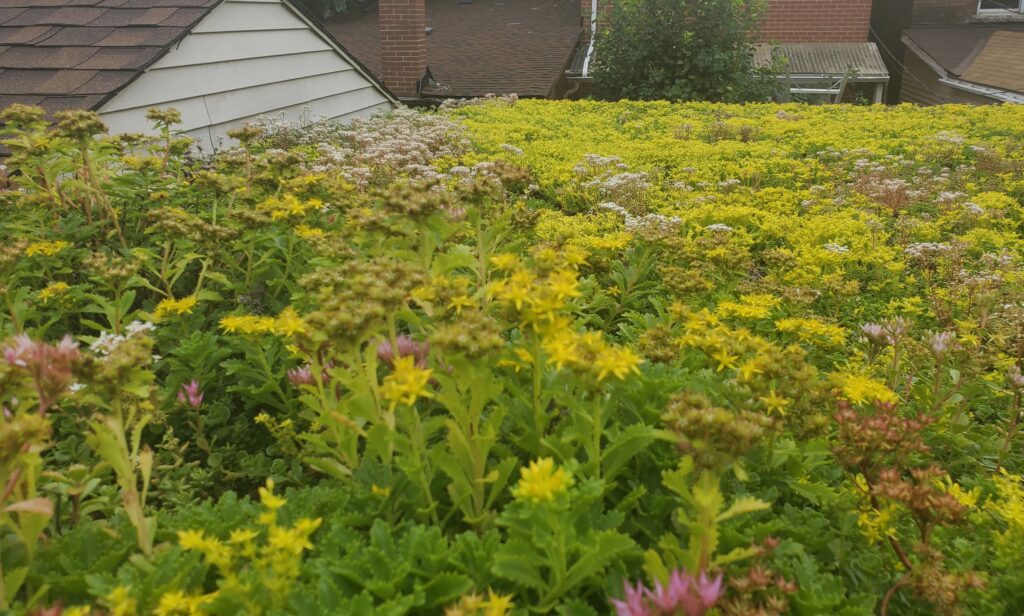
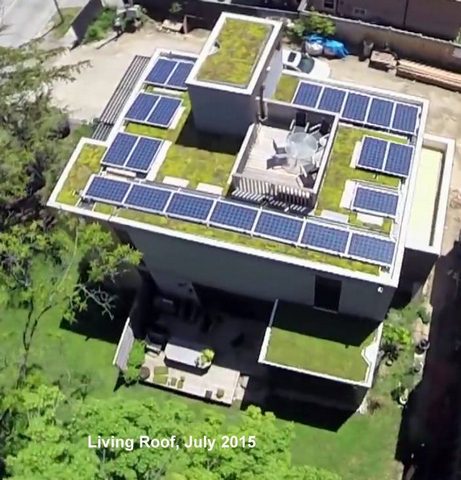
When we talk about building a more resilient, sustainable city, it’s easy to picture large infrastructure projects or sweeping policy changes. But some of the most powerful climate solutions are within reach of homeowners, right now. A green roof is a simple yet transformative step you can take, turning the space atop the home you already own into living, breathing green infrastructure.
Transformed for Climate Resilience
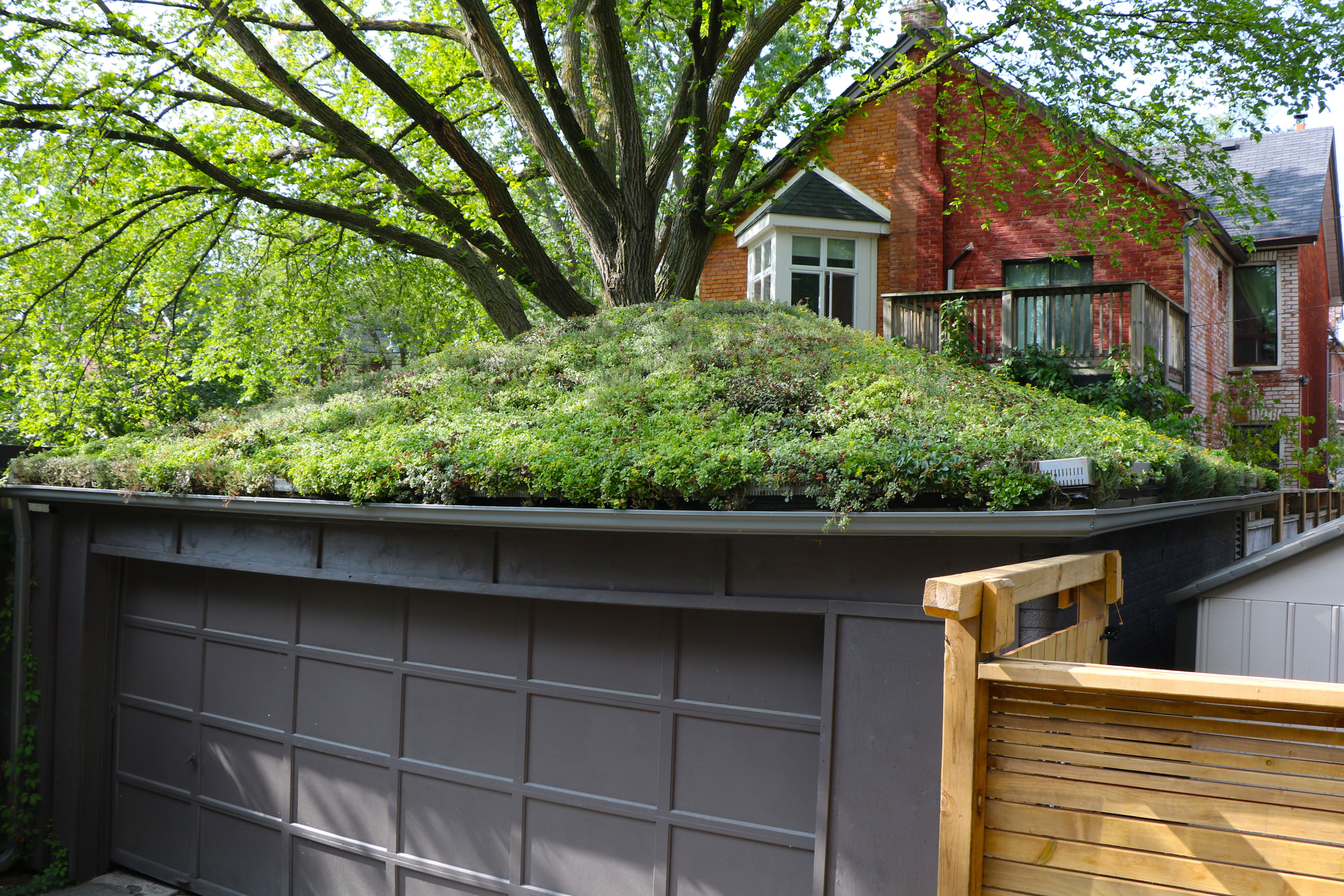
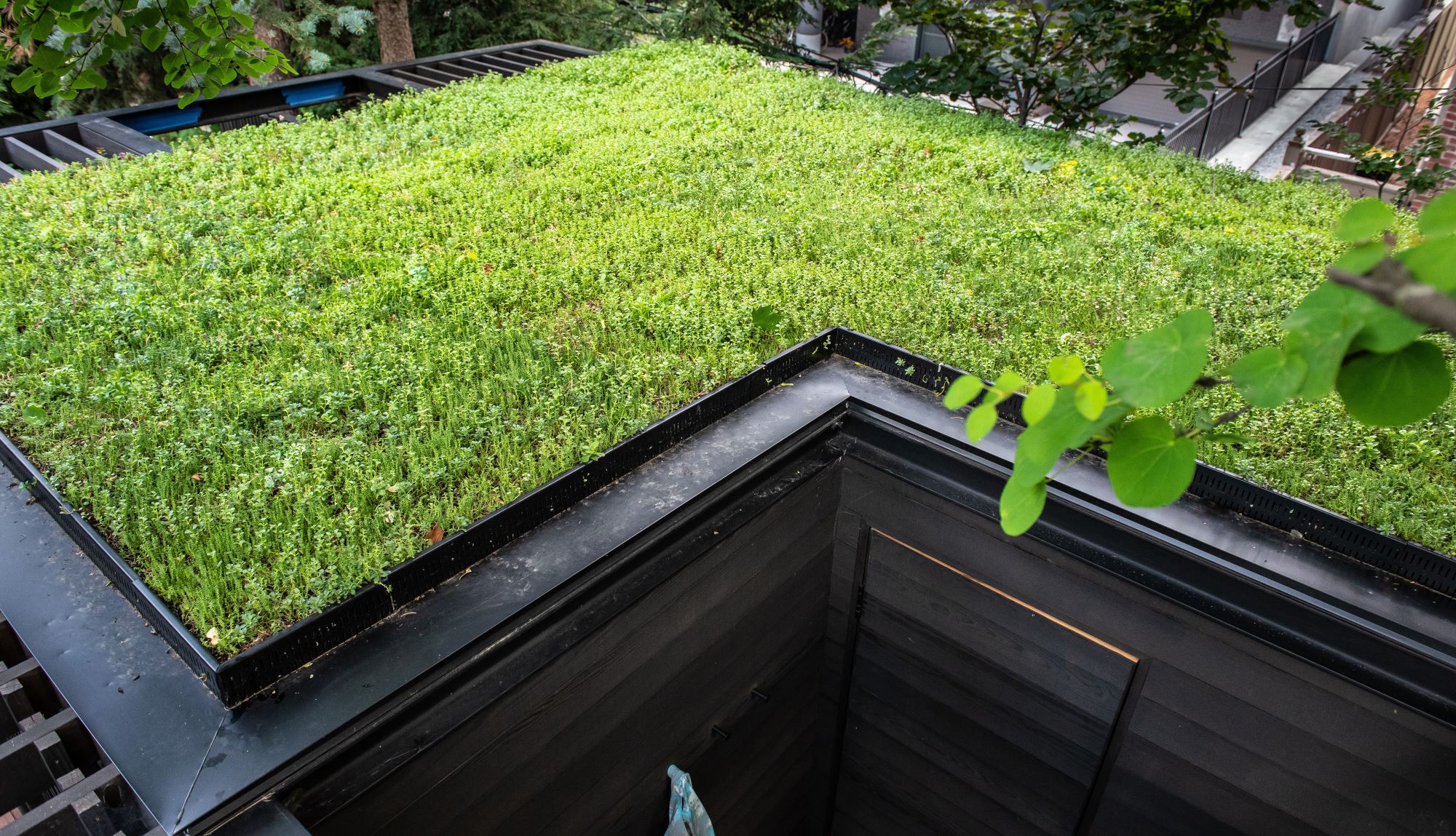
In dense urban centres like Toronto and Vancouver, every square metre of green space counts. One of the most inspiring things about green roofs is that they’re not limited to new construction. Many existing buildings, from single-family homes to commercial properties, can be retrofitted to support a green roof. With the right design and structural assessment, your current roof can become a thriving ecosystem. Next Level Stormwater Management has a variety of green roof systems to choose from to suit your structure and design goals. Most popular is our lightweight, economical LiteN’Less® system which is easy, quick and clean to install and maintain. Often, BioBerms® with additional native plants can be added to this soilless system.
Whether it’s the extensive, soilless system or an intensive biodiverse system such as the Alpine Meadow or Flora Garden, all of NLSM’s green roofs provide a basket of benefits that will increase your daily enjoyment, property value and contribute to a healthier and more resilient environment.
Real Impact of a Green roof on Your Home:
- Stormwater Management: Green roofs soak up rainfall and reduce runoff that can overwhelm storm sewers. During heavy storms, this makes a measurable difference
- Flood Mitigation: By slowing and retaining water, green roofs help prevent the flash flooding that’s becoming more common with climate change and can affect your property
- Longer roof lifespan: Protection from UV exposure and temperature extremes can significantly extend roofing membrane life and save you money
- Improved Urban Biodiversity: Pollinators and birds all benefit from pockets of habitat high above the street. A single green roof can become a stepping stone in a larger ecological network
- Improved Air Quality Green roofs help filter pollutants
- Enhanced Aesthetic: Green roofs transform bare rooftops into living landscapes bringing colour, texture, seasonal change, and a direct, calming connection to nature into everyday urban life
What Do I Need to Know?
Can my roof support it?
Many homes can, but a structural assessment is required, especially for older roofs.
What roof slope is allowed?
Green roofs work best on flat to moderately sloped roofs (typically up to ~20° with stabilization).
Can it go over asphalt shingles?
No, a green roof cannot go on asphalt shingles because shingles contain many penetrations, degrade when constantly wet, and are not root‑resistant. Green roofs require a tightly sealed membrane system compatible with root‑barrier layers.
Will it leak?
No, it will not leak if installed over a water-tight waterproofing and root‑barrier system that prevent leaks.
What plants are used?
Sedums, native grasses, and drought‑tolerant plants that thrive in shallow soil and harsh conditions are most common. Rooftop food production is also possible with the right growing media and if the structure can support the extra weight.
Will it attract pests?
No. A well‑designed green roofs does not attract pests and often support beneficial insects.
What are the costs and maintenance?
Costs vary by plantings, size of green roof and ease of access. Maintenance involves routine inspections and weeding.
TO Wants You To Go Green
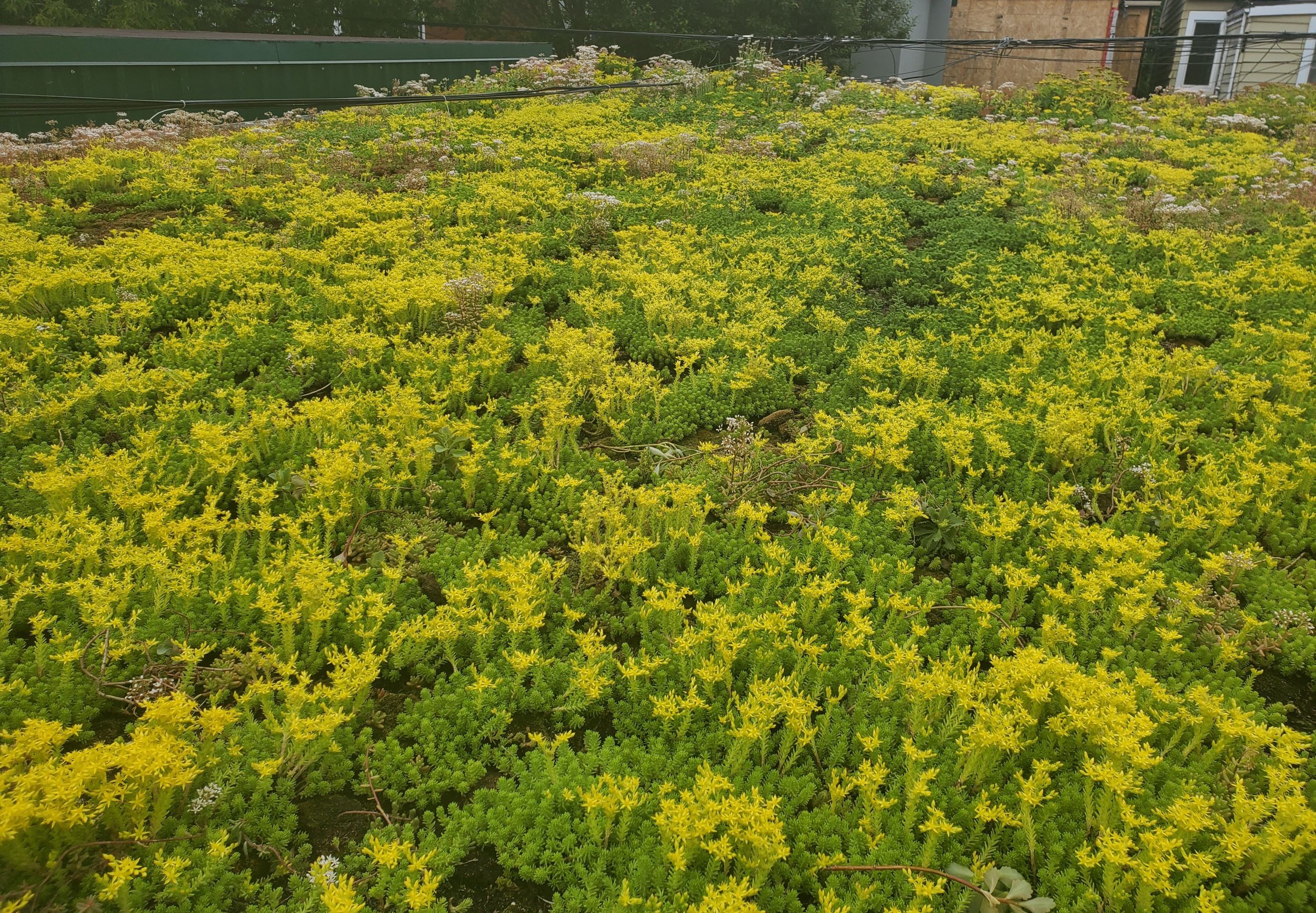
If you’re in Toronto, the City will support your retrofit through the Eco-Roof Incentive Program.
Toronto’s Green Roof Rebate helps you build your home’s resiliency while helping the city reach its climate and sustainability goals.
To learn more on how to navigate and apply for the rebate, read NLSM’s blog.
Vancouver’s Practical Green Roof Guide
Next Level can walk you through Vancouver’s practical Rain City Green Roof Best Practices Guide that supports homeowners interested in implementing green roofs to help manage rainwater on site, to improve building resilience, and support urban biodiversity.
Vancouver encourages voluntary green roofs by offering design tools, plant lists, and real‑world examples that make it easier for homeowners to plan and build high‑performing systems with confidence.
Read NLSM’s blog with highlights on Vancouver’s Rain City Green Roof Best Practices Guide.
Your Roof – Part of the Climate Solution
Let’s help your green roof grow! Ready to explore what a green roof could look like on your building? The Next Level Stormwater Management® team is here to help you take the next step.
Supplier of more than 3 Million SQFT Coast-to-Coast
Next Level Stormwater Management® (NLSM) is Canada’s leading supplier of high performance rooftop retention and detention solutions such as LiteN’Less®, StormCap®, Alpine Meadow and SpongeBase™. NLSM’s team has more than 90 years of combined industry experience and service. Contact NLSM by email or phone (416) 637-5772.
Making a Tangible Environmental Impact

By Cristina Senjug, Partnership Manager, Next Level Stormwater Management®
What is the Eco‑Roof Incentive Program?
The City of Toronto Eco‑Roof Incentive Program is a municipal environmental grant program that helps property owners offset the cost of installing green roofs and cool roofs on buildings within Toronto. Its main goal is to reduce urban heat, manage stormwater, lower energy use, and improve climate resilience across the city. The Eco‑Roof Incentive Program provides financial incentives to support the installation of:
- Green roofs (vegetated roof systems with plants and growing medium)
- Cool roofs (light‑coloured or reflective roofing systems)
These eco‑roofs help make Toronto cooler, greener, and more climate‑resilient by reducing heat buildup, managing rainwater, improving air quality, and lowering building energy costs.
1.1 Million Square Metres of Impact
Since 2009, Toronto’s Eco‑Roof Incentive Program has funded over 600 green and cool roof projects to create an estimated 1.1 million square meters of eco-roof space. These roofs have helped divert stormwater, reduce energy consumption and create jobs. They reduce citywide greenhouse gas emissions and have made a real, tangible environmental impact to help Toronto with its climate goals.
Want to retrofit your home’s rooftop?
Read A Sustainable Future Starts Right Above Your Head
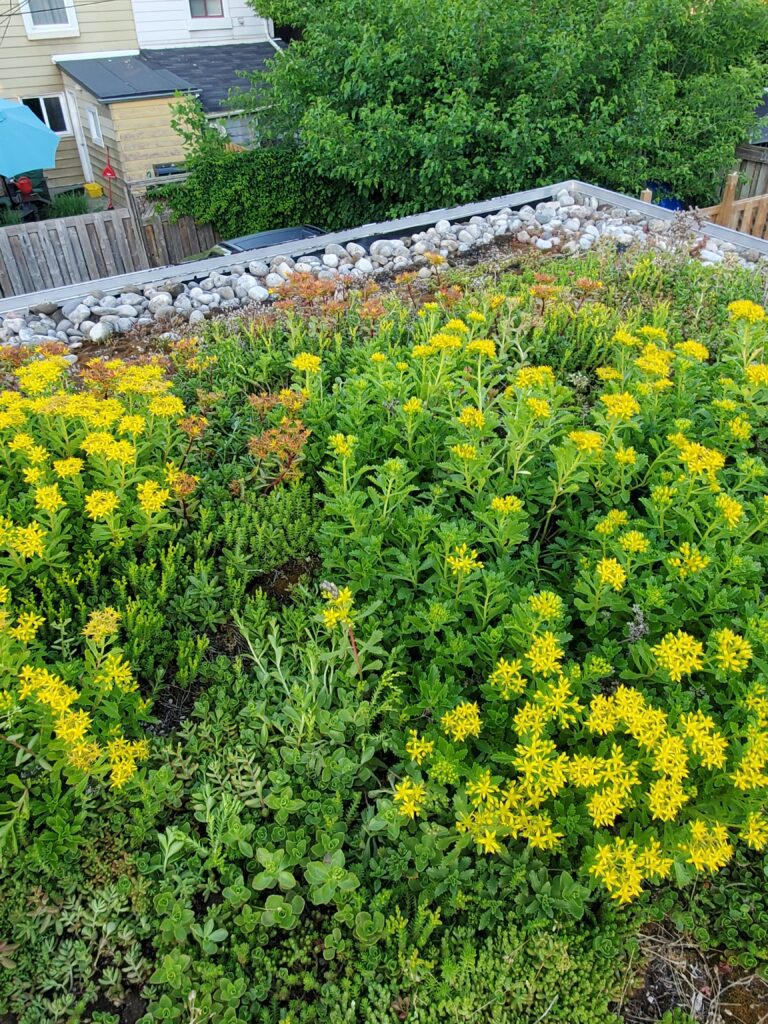
Eligible buildings
- existing residential, industrial, commercial & institutional buildings of any size
- new residential, industrial, commercial, & institutional buildings with a gross floor area of less than 2,000 m²
- all new construction projects by Toronto School Boards and not-for-profit organizations
Incentive
- $100 per m2 of vegetated area installed
- Maximum of $100,000 per green roof project
Green roofs on existing buildings are also eligible for up to $1,000 Structural Assessment Grant.
Download the One-Pager Reference
Toronto Green Roof Incentive for Homeowners
Here to Help With Your Application
Applications are open year‑round, but approval must be received before any construction begins. Next Level Stormwater Management’s (NLSM’s) team of Green Roof Professionals (GRPs) will help you apply for the green roof rebate and navigate Green Roofs Planning, Design, and Maintenance and Inspection and Maintenance Guide.
NLSM has a variety of green roofs to meet your design goals. All green roof systems are wind tested and comply with municipal requirements. Consider our most popular lightweight and economical LiteN’Less® pre-vegetated green roof that is easy, quick and clean to install. Upgrade with a BioBerm® for strategic visual and biodiversity enhancements where your building structure allows more weight. Or, make it an Alpine Meadow or a rooftop oasis with unlimited plantings and even food production with the Flora Garden.
Want to Learn More? Watch Webinar
Supplier of more than 3 Million SQFT Coast-to-Coast
Next Level Stormwater Management® (NLSM) is Canada’s leading supplier of high performance rooftop retention and detention solutions such as LiteN’Less®, StormCap®, Alpine Meadow and SpongeBase®. NLSM’s team has more than 90 years of combined industry experience and service. Contact Vicky Snyder at NLSM by email or phone 647-290-4460.
Celebrating World Landscape Architecture Month

By Cristina Senjug, Partnership Manager, Next Level Stormwater Management®
Every April, landscape architects across Canada join colleagues around the world to celebrate World Landscape Architecture Month (WLAM).
This is a time to recognize the important work landscape architects do to help design many of the outdoor spaces we use and pass through daily, from parks and neighbourhoods to campuses and city streets.
Working alongside urban planners, architects, and engineers, landscape architects help shape cities to be functional, sustainable, safe and welcoming.
Designing Gardens in the Sky
As Canadian cities grow denser through increased development and construction, landscape architects are essential in planning and designing resilient urban environments and responding to climate challenges such as urban heat, flooding, and biodiversity loss.
Green roofs are an exciting and innovative area of landscape architecture. Also known as vegetated roofs, green roofs transform unused rooftop spaces into vibrant, living ecosystems. They’re an example of how landscape architects combine ecology and hydrology to design thriving ecosystems to to provide environmental and social benefit. Through careful design and implementation, these vegetated rooftops manage stormwater, mitigate flooding, reduce urban heat, support biodiversity and restore much‑needed urban green space.
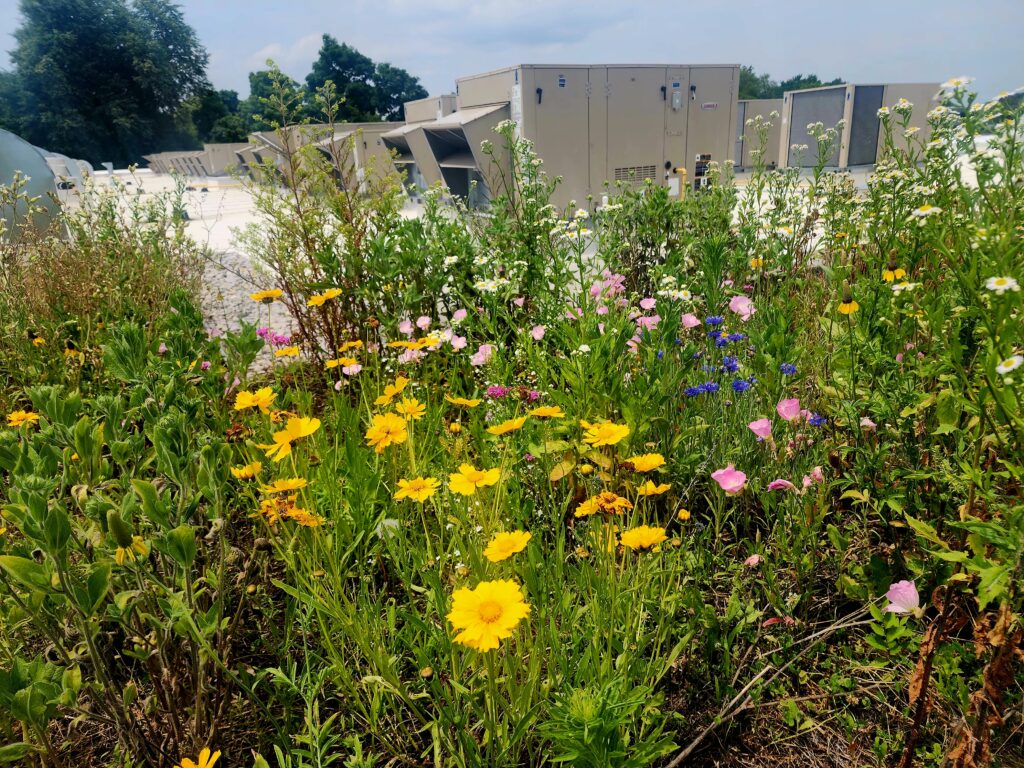
Next Level Stormwater Management is proud of our collaboration with landscape architects by consulting on and supplying millions of square feet of green roofs on hundreds of projects across Canada.
Below are recent aerial videos of some landmark green roofs.
Video of Biodiverse Green Roofs
Learn More about Landscape Architecture
Landscape architecture matters because it creates safe, healthy, and beautiful outdoor spaces where people, wildlife, and communities can thrive.
If you’re interested in landscape architecture where creativity and design blends with science and climate action, visit Canadian Society of Landscape Architects (CSLA) or check out one of several accredited landscape architecture programs across the country.
UNIVERSITY OF BRITISH COLUMBIA (MLA) | Vancouver, BC
UNIVERSITÉ DE MONTRÉAL (MLA) | Montréal, QC
UNIVERSITY OF CALGARY (MLA) | Calgary, AB
UNIVERSITY OF GUELPH (BLA/MLA) | Guelph, ON
UNIVERSITY OF MANITOBA (MLA) | Winnipeg, MB
UNIVERSITY OF TORONTO (MLA) | Toronto, ON
Supplier of more than 3 Million SQFT Coast-to-Coast
Next Level Stormwater Management® (NLSM) is Canada’s leading supplier of high performance rooftop retention and detention solutions such as LiteN’Less®, StormCap®, Alpine Meadow and SpongeBase™. NLSM’s team has more than 90 years of combined industry experience and service. Contact NLSM by email or phone (416) 637-5772.
For BC Designers, Consultants & Contractors
By Cristina Senjug, Partnership Manager with Dr. Karen Liu, Green Roof Specialist, Next Level Stormwater Management
In February 2026, the City of Vancouver released the Rain City Green Roof Best Practices Guide a green roof resource for architects, landscape architects, engineers, consultants, developers and contractors in British Columbia (BC).
While not a binding construction standard, the guide provides practical, implementable solutions to help meet Vancouver’s target of capturing and treating 90% of average rainfall through green infrastructure.
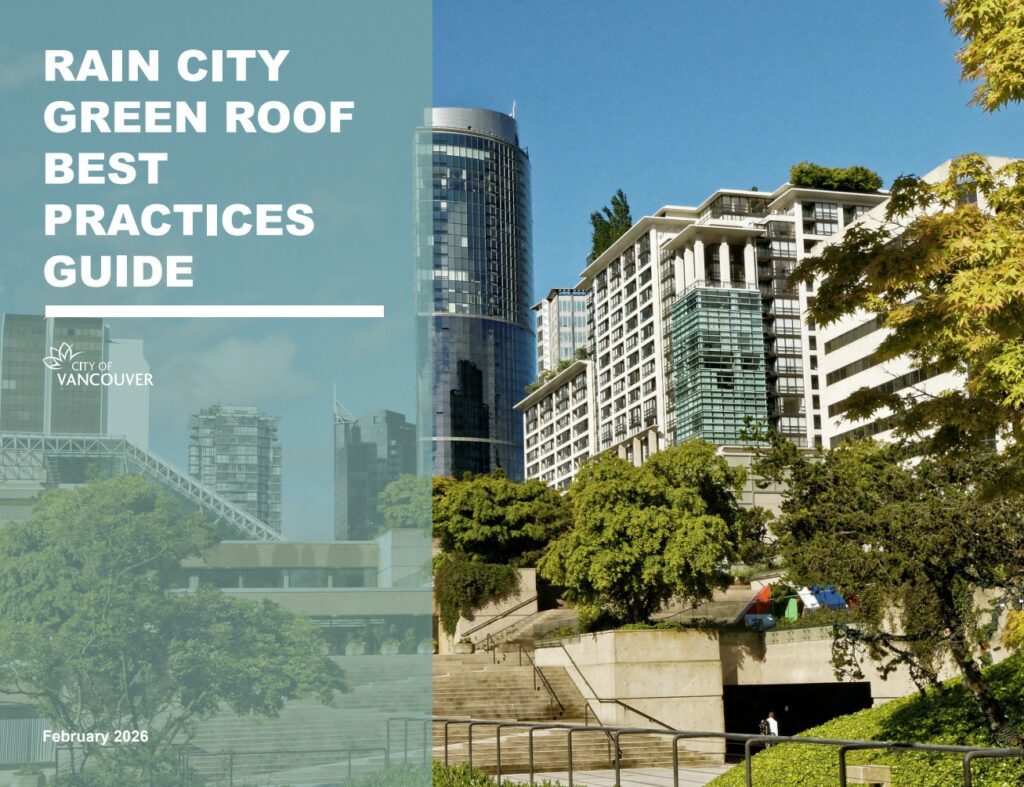
The City’s Rain City Green Roof Best Practices Guide is the result of three years of collaboration between various internal departments and external consulting firms and subject matter experts.
Next Level’s Vancouver-based Dr. Karen Liu, Green Roof Specialist was humbled to take part and contribute her knowledge and experience to this important document.
Encourages Multi-Functional Green Roofs
The guide encourages green roof designs that optimize multi-functional benefits and performance to help advance the City’s climate adaptation, livability and environmental issues.
While not a construction standard, the guide offers practical guidance that enhance the quality and resilience of green roofs through design, installation and maintenance.
Recommended Plant List & More
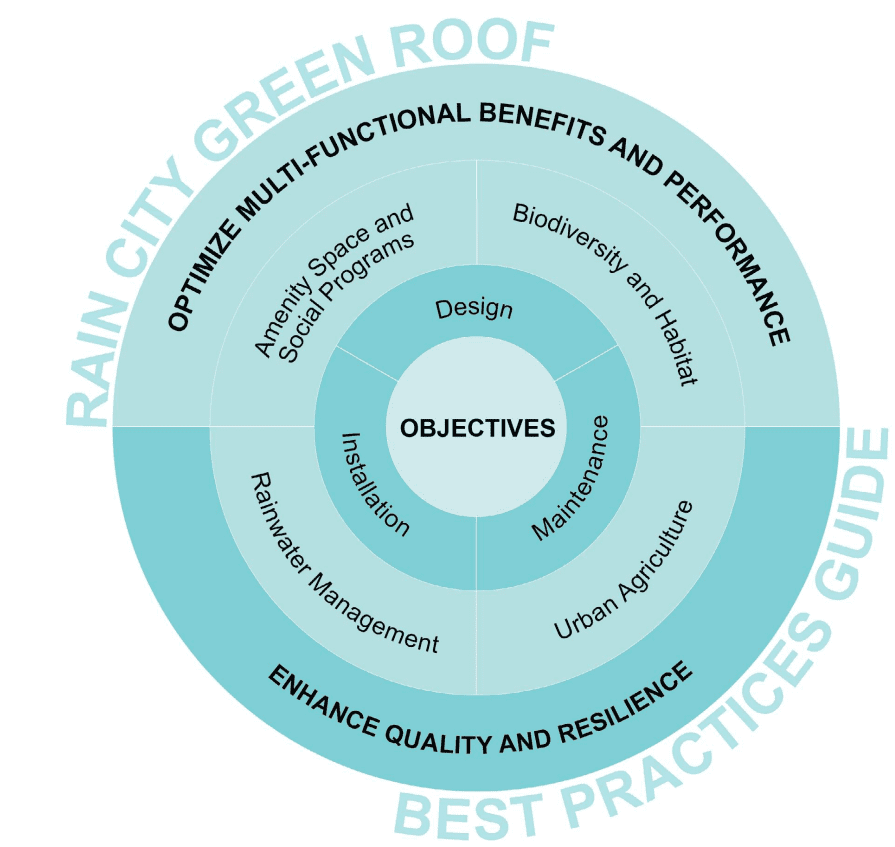
Some highlights from the Rain City Green Roof Best Practices Guide:
- Explains how green roofs advance the City’s strategies and policies, including its updated Rainwater Management requirements that came into effect on January 1st, 2026.
- Shares best practices for the design, installation and maintenance of resilient and multi-functional green roofs, highlighting the life-cycle approach.
- Offers design scenarios that emphasize multi-functionality and multiple co-benefits such as rainwater management, biodiversity, amenity space and urban agriculture.
- Shares case studies of green roofs in Vancouver, including the renowned Robson Square and BC Law Courts roof that was originally built in 1978 and reconstructed in 2009.
- Provides a recommended green roof plant list to support pollinators, enhance urban biodiversity and foster ecosystem connectivity.
- Includes a habitat enhancement guide that offers design strategies to create biodiverse green roofs that support bees, insects and birds in the city.
Emphasis on Quality & Function
The green roof guide emphasizes the importance of both quality and function when undertaking a green roof project.
From a supplier’s perspective, Next Level Stormwater Management (NLSM) could not agree more. Our company offers high quality green roof systems to achieve a wide range functions such as rainwater management, biodiversity enhancement and amenity provision.

Tested & Guaranteed Vegetated Roofs
NLSM’s high-performing materials and systems have been accepted for the RCABC’s RoofStar Vegetated Roof Guarantee and have been tested to the stringent CSA A123.24 Standard Test Method for Wind Resistance of Vegetated Roof Assembly recently incorporated in the newly released National Building Code of Canada 2025.
Canada’s Supplier of more than 2.5 Million SQFT
Next Level Stormwater Management (NLSM) is Canada’s leading supplier of high performance rooftop retention and detention solutions such as LiteN’Less™, StormCap™, Alpine Meadow and SpongeBase™. Ready to start your green roof project? The NLSM team has more than 90 years combined industry experience and here to support you at every stage from design and construction to maintenance. Please email us or call 416-637-5772 today.
By Cristina Senjug, Partnership Manager, Next Level Stormwater Management
Next Level’s Dr. Karen Liu, Green Roof Specialist along with Cristina Senjug, Partnership Manager are honoured to partake as trainers with the annual Earth Tending Green Infrastructure Training program and look forward to the next session in May 2026.
The Earth Tending program by SpruceLab is an initiative for First Nations, Inuit, and Métis Peoples in the GTA, blending Indigenous Knowledge with Western green infrastructure practices through hands-on, land‑based learning. The program builds skills and pathways into the growing green infrastructure sector while strengthening climate resilience through nature‑based solutions.
Part of the training includes a rare tour of CF Sherway Gardens’ North Expansion Green Roof.
Take a minute and enjoy the unfolding spring splendour of CF Sherway Gardens’ North Expansion green roof in the videos taken during the tours over the last couple of years. CF Sherway Gardens’ North Expansion features 9500 square feet of a soilless green roof system supplied by Next Level Stormwater Management and installed in 2014 and 2015.
Dr. Karen Liu field’s participant questions from Vancouver, BC

Next Level Stormwater Management team looks forward to more opportunities to learn and work together in the future.
Meegwetch to all participants, Gwen Lane and SpruceLab Inc. We feel privileged to work with you!
More Than 2.5 Million Square Feet Coast-to-Coast
NLSM is Canada’s leading supplier of pre-vegetated roofs such as the LiteN’Less™ and StormCap™ systems. We customize to local requirements. Offer warranty & maintenance support, provide stormwater calculations specific to location and building/roof type, stormwater test data & related innovative hydrologic modelling. Click here to get a quote or to design your next green roof.
Towards a Clean, Healthy and Sustainable Canada
By Cristina Senjug, Partnership Manager, Next Level Stormwater Management
Next Level Stormwater Management is Canada’s leading green roof supplier with more than 90 years of combined industry experience delivering premium products and customer service. Enjoy the selection of projects below from coast-to-coast.
McLoughlin Point Wastewater Treatment Plant, Victoria BC

Sitting majestically atop an escarpment in Esquimalt, the McLoughlin Point plant can treat 108 megalitres of wastewater per day to tertiary level – one of the highest levels possible. Its 1,700 m2 multi-level extensive green roof consists of a soilless system containing vegetation with low nutrient needs, which minimizes fertilizer use and potential leaching. BioBerm™s were incorporated as an innovative and cost-effective option to enhance biodiversity with a more expansive plant palette. The treatment plant and its roof work together to keep our water, and environment, clean and healthy.
Aquabella at Bayside, Toronto, ON
Aquabella at Bayside is a LEED Platinum luxury condo complex designed by 3XN, FORREC and Kirkor Architects Planner. The buildings feature BioBerm™ plant plugs that are integrated with the Terra Ext extensive green roof system to enhance biodiversity and meet the Toronto Green Standard. While invisible to most, this ecological haven next to Lake Ontario is a thriving habitat for many species of insects and pollinators.
Bianca Condos, Toronto, ON
Bold and beautiful, Tridel’s mid-rise boutique condominium in Toronto’s Annex was designed by Teeple Architects and Kirkor Architects and Planners. Bianca is a LEED Gold luxury condo building complex that features 720 square metres of the Terra Ext green roof system providing stormwater management, cooling benefits as well as an ecological habitat for various insects and pollinators.
Broadway Tech Centre, Vancouver BC
A 6.9-hectre business campus where its 8 low-rise office buildings have been awarded LEED and BOMA certifications in 2019. A key sustainable design feature is the 10,000 m2 lightweight, pre-grown soilless extensive vegetated roof system that was installed on the four main buildings. The green roofs absorb 10 million litres of rainfall every year, diverting it from the ocean and keeping Canada’s west coast clean and pristine.
Sherway Gardens Shopping Centre, Toronto ON

Toronto’s largest commercial green roof of 9,500 m2 offers neighbouring towers a pleasing view of numerous levels of vegetated rooftops that change with the seasons. The extensive green roof system was chosen to slow stormwater runoff from the roof. Because of its size and water retention capacity, the green roof reduced the size of the original storage tank required. The roof also contributed to the building attaining LEED certification.
Hampton Inn by Hilton, Halifax NS

Centrally located in downtown Halifax, Hampton Inn is an eco-friendly hotel that is just minutes from the historic Halifax Citadel. The 630 m2 Xeroflor® XF301 Sedum Standard vegetated roof system not only keeps the rooms cool in the summer and lowers the energy bill, it also supports an urban habitat for birds, bees and butterflies to promote biodiversity in Canada’s east coast.
Yonge Sheppard Centre, Toronto ON

Pollinator friendly flowers help honey bees thrive atop theYonge Sheppard Centre in the middle of one of Toronto’s busiest hubs. The TerraExt Sedum Standard green roof brings nature back amidst rows of retail shops and glass facades and towering skyscrapers. Urban beekeeping boosts pollination and improves sustainability, food security and biodiversity in cities. This venture is in collaboration with the Teddy Bee Honey Company. The green roof helped Yonge Sheppard Centre achieve BOMA Best Certification.
Two Old Mill, Toronto ON

This lush and varied green roof is a beautiful mix of extensive and intensive vegetated roof systems. The extensive lightweight and soilless system is comprised of loose-laid base layers and a pre-vegetated mat. Over 50% of the plant species selected for Two Old Mill are native to the area. Meeting the Toronto Green Development Standard Tier II helped the building achieve LEED Gold Certification. Award-winning and praised for its varied landscape and vibrant palette, this rooftop provides multiple environmental benefits.
Pavillon d’accueil au golf du parc Maisonneuve, Montreal QC

This green roof is innovative as it features a soilless extensive system with the BioBerm™ feature to create a meadow-like rooftop befitting the surrounding green oasis. The vegetated roof integrates the best features of extensive and intensive green roof systems to create topographic diversity and add texture and movement to an otherwise flat roofscape. It combines the soilless pre-vegetated system with mounding ornamental and native grasses and perennials that are planted through the sedum blanket in areas with built-up berms of growing medium.
Charles P. Allen High School, Bedford NS

The extensive green roof on this state-of-the-art building not only keeps the classrooms cool in the summer and extends the roof membrane’s service life, it also provides an innovative living learning space for the students. The Xeroflor® XF301 Sedum Standard vegetated roof system is very lightweight at only 57 kg/m2 when fully saturated yet able to resist high winds up to 133 km/h on Canada’s east coast.
Duet Condo, Victoria BC
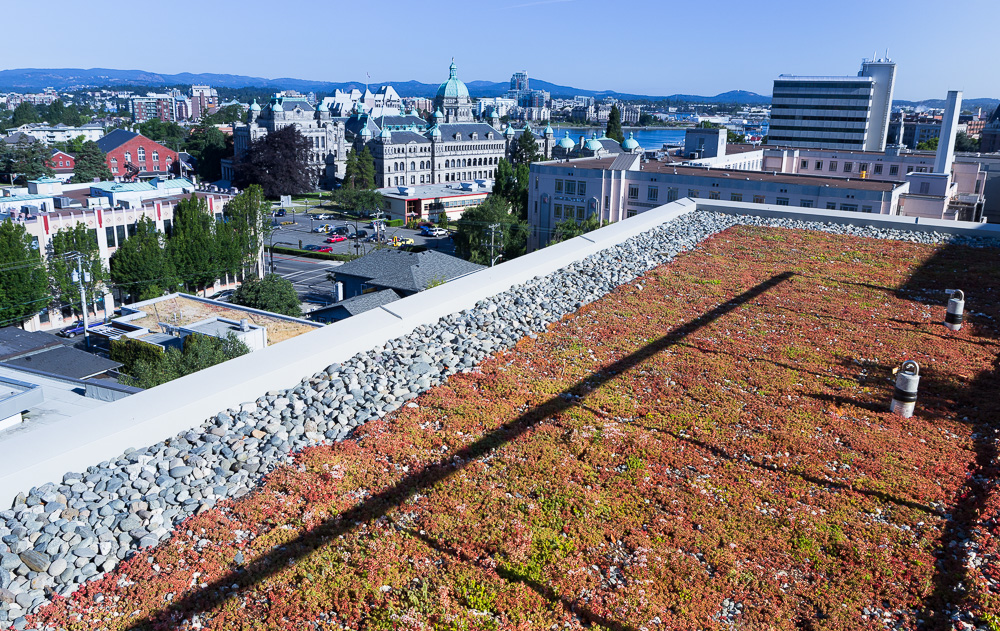
Situated in Victoria’s historic James Bay, Duet offers urban living in harmony with nature and ocean in Canada’s west coast. The accessible rooftop patio is surrounded by a Xeroflor® XF301 Sedum Standard pre-vegetated green roof that offers year-round visual interest and requires minimal maintenance. It naturally cools the residence units in the summer and reduces the need for air conditioning.
The Biosphere, Montreal QC
We end our tour of Next Level’s green roofs across Canada with this landmark green roof. This time lapse video by Environment and Climate Change Canada shows the quick and simple installation of the extensive green roof system on the Biodome. The former World Fair pavilion is now fittingly a natural science museum dedicated to the environment.
Supplier of more than 2.5 M SQFT Coast to Coast
NLSM is Canada’s leading supplier of pre-vegetated roofs such as LiteN’Less™, Xeroflor® and StormCap™ systems. We customize to local stormwater and biodiversity requirements. Email or call (416) 637-5772
High Performance. Low Emissions. Future-Proofed
By Dr. Karen Liu, Green Roof Specialist, Next Level Stormwater Management®
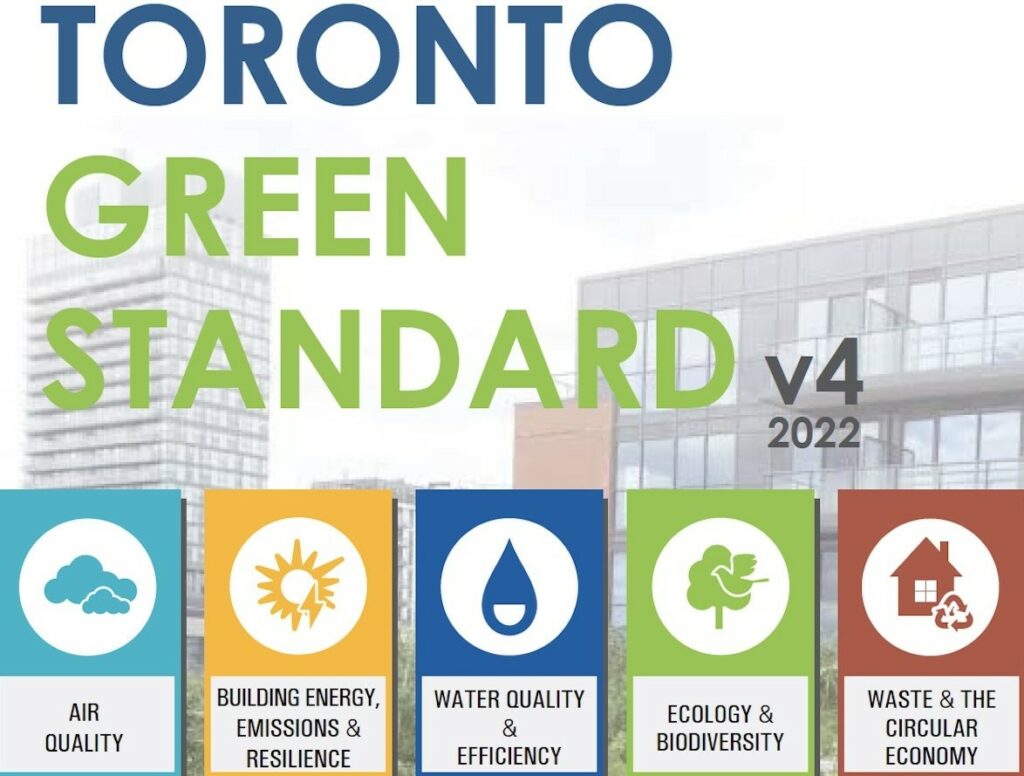
The Toronto Green Standard version 4 (TGS v4) raises the bar for all new development in the city. Green roofs play an important role especially on tight, urban sites. TGS v4 applies to all new planning applications in the City of Toronto received on or after May 1, 2022. Below is a review of the requirements and how green roofs help meet them.
Five performance categories:
- Air Quality
- Building Energy, Emissions & Resilience
- Water Quality & Efficiency
- Ecology & Biodiversity
- Waste and the Circular Economy
Importance of Green Roofs
Green roofs, with their multiple benefits, play an important role in TGS v4 via 2 categories Water Quality & Efficiency (WQ) by Managing Stormwater and Ecology & Biodiversity (EC) through Landscape & Biodiversity.
WQ 1.1 Water Balance, Quality & Quantity Control
Tier 1 Water Balance requires the site to retain a minimum of 50% of the total average annual rainfall volume (or equivalent 5mm from each rainfall event) generated from all site surfaces through infiltration, evapotranspiration, water harvesting and/or reuse, in accordance with the Wet Weather Flow Management Guidelines (WWFMG).
Green roofs can retain rainfall through initial abstraction (IA). According to the WWFMG, the IA are 5mm and 7mm for extensive and intensive systems, respectively. Furthermore, stored water in the cistern can evapotranspirate on the green roof through irrigation water reuse. These mechanisms are key to achieve water balance on site. NLSM offers optional irrigation reports to support water balance calculations.
TGS v4 defines an Intensive green roof as having a minimum growing medium depth of 150 mm with a diverse mix of plants appropriate to the growing medium depth and roof height. On the other hand, extensive green roofs contain hardy, low-profile plants growing in less than 150 mm of growing medium.
WQ 1.3 On-site Green Infrastructure
Tier 1 requires the total landscaped site area, located at and above grade. It includes at least 1 of the following six green infrastructure features:
- A Green Roof covering at least 80% of Available Roof Space
- An Intensive Green Roof for 80% of the Green Roof Area provided
- A Biodiverse green roof to support pollinator species covering a minimum of 50% Green Roof Area
- 25% of the Lot Area at or above-grade, planted with native flower/pollinator species
- At-grade Bioretention facilities provided to capture and control 75% of runoff from on-site hardscape surfaces, or
- Reforestation of a portion of the site (beyond the limit of a stewardship plan)
Note that three of the six options above involve green roofs. Putting green infrastructure on the roof is particularly attractive for development in tight urban sites with perhaps zero lot lines where there is little or no space to accommodate green infrastructures at grade.
The TGS v4 defines a Biodiverse green roof as an Intensive green roof that supports pollinator species. It is located at or below the 8th storey of the building to maximize pollinator access and must follow the recommended plant species found in Appendix A of the Design Guidelines for Biodiverse Green Roofs, with at least two species in bloom at all periods over the growing season. The design must also address two or more applicable Design Strategies from section 4.2 of the guide as listed below:
- Increase depth of growing medium
- Vary composition (structure) of growing media
- Provide topographic variety
- Provide microclimates
- Diversity plant species
- Provide perching habitat
- Provide nesting opportunities
- Provide water source (s)
A permanent irrigation system is required on both intensive and biodiverse green roofs to provide supplemental watering as necessary. Direct access to the roof should be provided for maintenance through a door or hatch located away from the edges to enable safe maintenance. A maintenance contract is recommended for at least the first 5 years of the green roof to ensure it receives a good start.
EC 2.3 Green and Cool Roofs
Landscape & Biodiversity Tier 1 requires buildings to provide one or a combination of the following:
- Green Roof
- Solar PV, or
- Cool roof
NSLM Green Roof Systems Comply with TGS v4
All NLSM green roof systems meet the TGS v4. NLSM offers optional professional engineer-stamped wind letter for submission to the City. This chart summarizes the compliance path and helps you select the system that best meets your project’s needs:
| Categories* | NLSM Systems | WQ 1.3 Compliance Options | WQ 1.1 Initial Abstraction** |
| Extensive | LiteN’Less® II | 80% of available roof space | 5 mm |
| LiteN’Less® III | 80% of available roof space | 5 mm | |
| StormCap® | 80% of available roof space | 5 mm | |
| StormCap® Detain 3° | 80% of available roof space | 5 mm | |
| TerraExt Sedum Standard | 80% of available roof space | 5 mm | |
| TerraExt with BioBerm® | 80% of available roof space | 5 mm | |
| Intensive | Flora Garden | 80% of green roof area provided | 7 mm |
| Biodiverse | Alpine Meadow | 50% of green roof area provided | 7 mm |
| Alpine Meadow+ | 50% of green roof area provided | 7 mm |
** Based on Toronto Water’s Wet Weather Flow Management Guidelines (WWFMG)
Supplier of more than 3 M SQFT Coast-to-Coast
NLSM is Canada’s leading supplier of pre-vegetated roofs such as LiteN’Less®, Xeroflor® and StormCap® systems. We customize to local requirements. Email or call (416) 637-5772.
Blue-green roofs can transform urban stormwater management
By Cristina Senjug, Partnership Manager Next Level Stormwater Management
Innovative Blue-Green Roofs for Climate Adaptation and Resilience is a co-presentation at Grey to Green by Dr. Farzad Fahimi, Vice President at LEA Consulting and Dr. Karen Liu, Next Level Stormwater Management’s green roof specialist. Their presentation focuses on design strategies, cost-benefit analysis, and real-world performance of blue-green roofs. A Toronto green roof case study reviews an upgrade to a blue-green system to provide enhanced stormwater detention to eliminate the need for costly underground tanks.
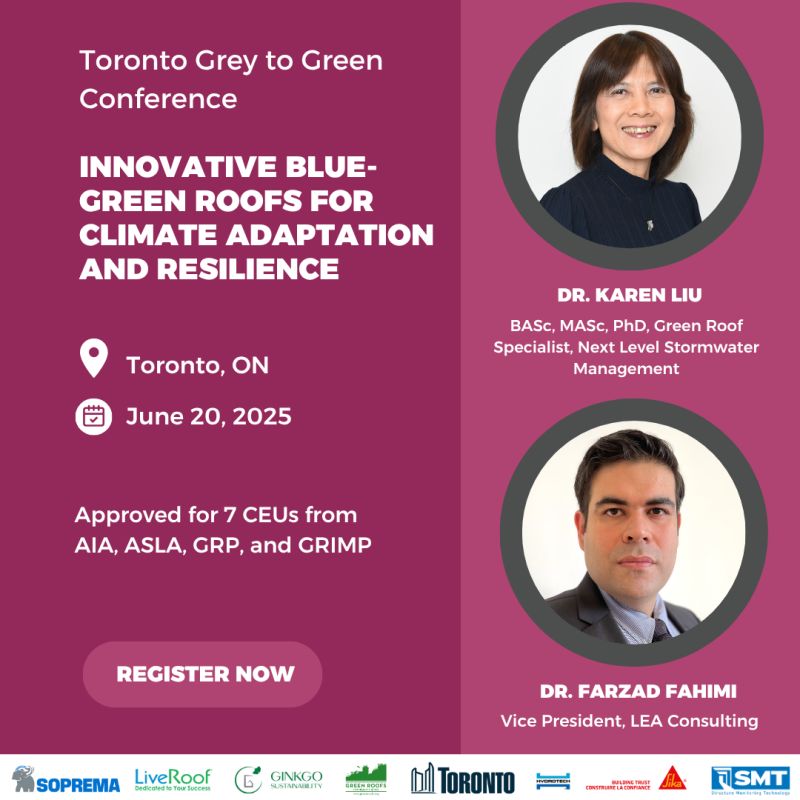
Dr. Farzad Fahimi has over 20 years experience on major environmental, municipal, infrastructure, and land development projects. His expertise spans watershed management, climate change adaptation, master planning, linear infrastructure, large-scale sewer systems, river engineering, and the integration of Green Infrastructure (GI) and Low Impact Development (LID).
Before joining the private sector, Dr. Karen Liu was a lead researcher of the green roof programs at the National Research Council and the British Columbia Institute of Technology. She led the research teams to evaluate water balance and examine stormwater management potential. Karen was a key participant in the research consortium that developed the first national wind testing standard for vegetated roofing CSA A123.24.
Canada’s Supplier of more than 2.5 Million SQFT
Next Level Stormwater Management (NLSM) is Canada’s leading supplier of high performance rooftop retention and detention solutions such as LiteN’Less™, StormCap™, Alpine Meadow and SpongeBase™. Ready to start your green roof project? The NLSM team has more than 90 years combined industry experience and here to support you at every stage from design and construction to maintenance. Please email us or call 416-637-5772 today.

Enhance Biodiversity

BioBerm™s are rounded mounds of growing media on an otherwise level vegetated roof. They offer a natural, seamless way to integrate extensive and intensive green roof systems. This not only adds visual interest but supports more varieties of plants and a wider range of wildlife. Biodiverse roofs can contribute up to 2 points under LEED v4.1 “Sustainable Sites – Protect or Restore Habitat”. See Portfolio of Green Roofs with Bioberms™.
Manage Structural and Cost Limitations
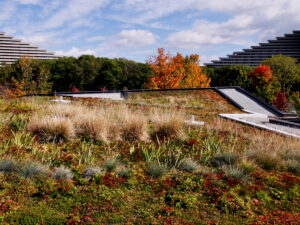
While intensive systems support greater biodiversity, they can be too heavy and/or expensive for many projects. BioBerm™ is a smart way to creatively manage structural and cost limitations. Designers can strategically add depth to those parts of roof that can support the added load, such as over a load-bearing beam or near a structural wall, while keeping weight and cost low with an extensive system on the rest of the roof.
Create Microclimates and Microhabitats
In addition, the transition between extensive and intensive systems creates localized hills and valleys on the roof. The hills favour drought tolerant plants while the valleys support taller and denser vegetation, which attract different insects, birds and wildlife. As a result, BioBerm™s can create different microclimates and microhabitats to support potentially higher biodiversity than an intensive system.
In Toronto, stormwater is often stored in underground cisterns to meet site runoff requirements. This water is reused through irrigation or toilet flushing to create storage space for the next rain event. BioBerm™s enable designers to combine plants with high and low irrigation needs on one roof, so the green roof will evapotranspirate more when water is available but perverse moisture when the tank is empty.
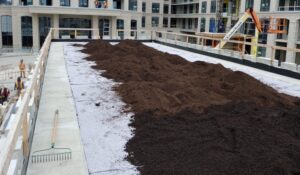
Steps How to Create a BioBerm™?
Although not necessary, a good way to create a BioBerm™ is to cover the entire growing substrate surface with a pre-vegetated sedum mat. Simply cut slits and plant plugs through the openings into the growing medium underneath. The pre-vegetated mat has many benefits to offer.
Sedum Mat is an Instant Green “Cover Crop”
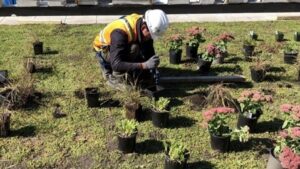
While the native plant plugs grow, the sedum mat prevents wind and water erosion of the growing medium during establishment. It also acts as a “living mulch” to preserve soil moisture, reduce irrigation needs and minimize airborne weed encroachment.
Many native and adapted vegetation will thrive in 100-200 mm of growing medium in the BioBerm™. Select plants whose natural habitats are similar to the rooftops and avoid invasive species. Design plant palettes that offer longer bloom time to provide nectars for bees and butterflies and produce seeds and berries for birds. City of Toronto’s Design Guidelines for Biodiverse Green Roofs is an excellent resource in creating a successful biodiverse green roof.
Supplier of more than 2.5 M SQFT Coast-to-Coast
Canada’s leading supplier of pre-vegetated roofs, NLSM customizes to local requirements, offers warranty & maintenance support, provides stormwater calculations specific to location and building/roof type, stormwater test data & related innovative hydrologic modeling. Click here to get started on your next green roof.