
Tag: eco friendly
The Business Case for Green Roof Amenity Space
The following blog post summarizes key insights from “Sky‑High Returns: The Economic and Social Case for Green Roof Amenity Space,” featured in the Spring 2026 issue of Living Architecture Monitor.
By Dr. Karen Liu, Green Roof Specialist, Next Level Stormwater Management®
As North American cities densify to address climate change, population growth, and housing affordability, green space at ground level is becoming increasingly scarce. In this context, green roof amenity spaces are no longer optional. Instead, they are essential urban infrastructure that supports human well‑being while delivering measurable economic value.

Research increasingly demonstrates that the benefits of green roofs extend well beyond environmental performance. In the United States, apartment buildings with green roofs in New York City’s Battery Park City neighbourhood achieved average rents 16% higher than comparable buildings without green roofs. In Oak Park, Illinois, second‑floor condominium units with private green roof terraces sold for 12.4% more per unit, while green roof construction costs were significantly lower than the added value.
Canadian research shows similar results. A CMHC study estimated that recreational rooftop gardens can increase property values by approximately 11%. More recently, a University of Northern British Columbia study analyzing over 2,000 property listings found that green roofs increased average property values by approximately $700,000 in Vancouver, and added approximately $325 per square metre ($30 per square foot) in Toronto. Given that typical extensive green roof costs in Toronto range from $25–35 per square foot, many projects can recover all or most of their investment through increased listing prices alone, before accounting for energy savings, stormwater compliance, and extended roof membrane lifespan.
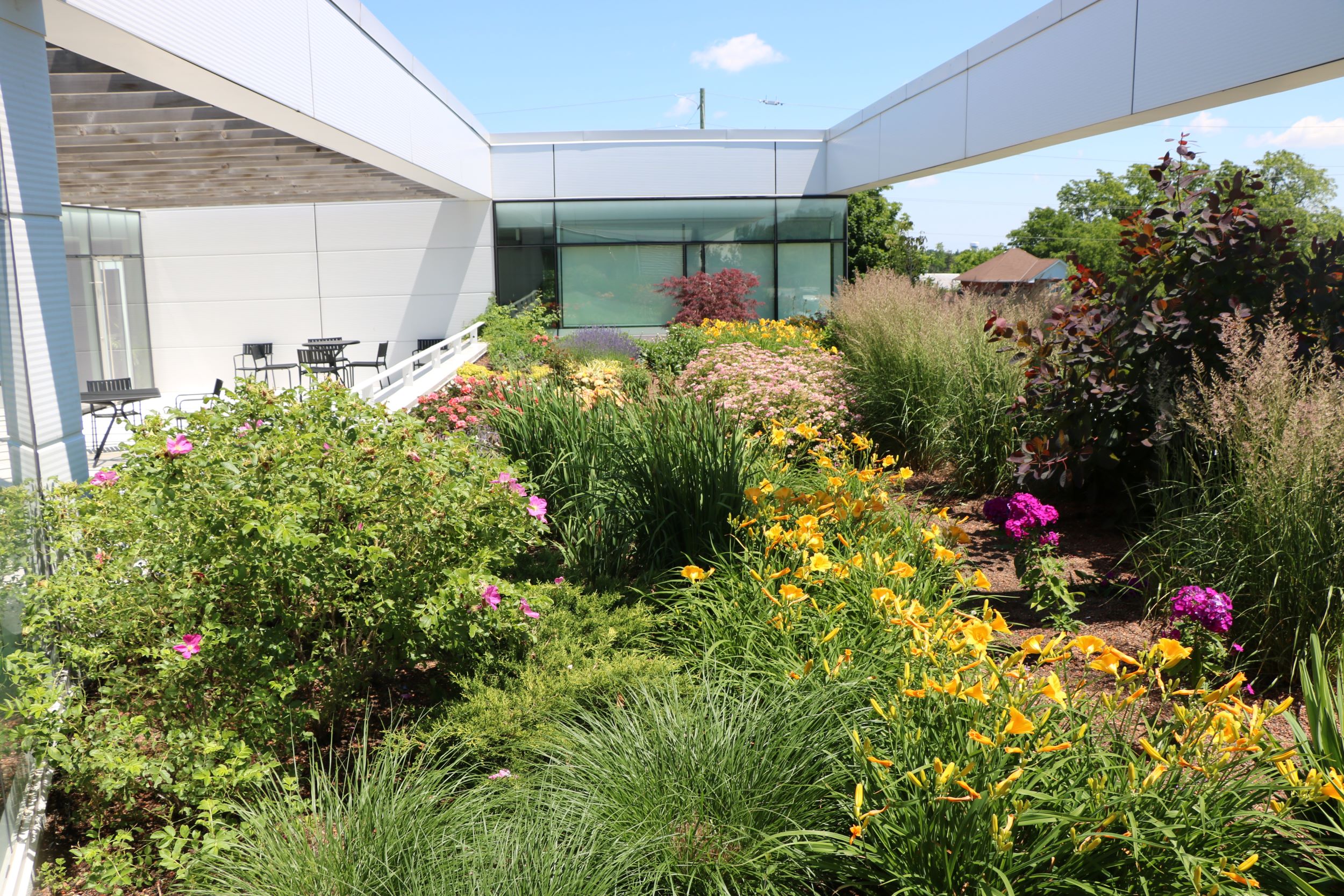
Multi-functional Rooftop Hardscapes
Municipal requirements for outdoor amenity space and stormwater management often compete for limited rooftop area on new developments. This challenge can be exacerbated by restrictions on “double dipping.” For example, the City of Toronto limits green roofs to no more than 25% of required outdoor amenity space for apartment buildings. Fortunately, emerging design strategies allow amenity spaces to also manage stormwater effectively.
Our SpongeBase™ system adds retention and detention capacity and effectively transforms otherwise impervious amenity surfaces into pervious ones to help meet the site’s stormwater management targets. SpongeBase Retention inserts water-absorbent materials in the void space under patio pavers or decking to retain water and help meet municipal water balance target. SpongeBase Detention involves detention elements that convert the space below the rooftop patio into temporary detention reservoirs to meet quantity control requirement. These tools can be seamlessly integrated with green roofs or blue‑green roof systems to create dual‑function green roof amenity spaces that serve people and infrastructure needs simultaneously.

Growing Demand for Green Roof Amenity Space
Beyond financial and regulatory benefits, green roof amenity spaces deliver significant social and health value. They provide restorative outdoor environments for residents, workers, students, patients, and visitors, supporting mental health, reducing stress, and fostering social connection. Research consistently shows that even visible green roofs, including those on schools and hospitals, contribute to improved well‑being and learning outcomes.
While returns vary by building and location, the evidence is clear: green roof amenity spaces increase property value, support urban resilience, and improve quality of life. With more than 80% of people in Canada and the United States living in cities, designing multifunctional rooftop green spaces is becoming essential to meeting the needs of urban communities.
Technical Expertise and Project Support
Next Level Stormwater Management works with design teams to supply and integrate green roofs and amenity spaces that can increase ROI, extend roof membrane service life and improving the building’s return on investment.
Beyond supplying systems and products, Dr. Karen Liu and the rest of the Next Level Stormwater Management® team provide technical guidance, system selection and design coordination services to help project teams confidently deliver green roof amenity spaces that satisfy performance targets and user expectations. This collaborative approach supports better outcomes and long‑term performance.
About the Author
Dr. Karen Liu is a leading expert in green roof research with more than 25 years of experience spanning research, standards development, and hands-on project delivery. She has led pioneering green roof research programs in Canada, helped develop national wind testing standards for vegetated roofing, and contributed to dozens of influential technical and academic publications. Karen has worked on hundreds of green roof projects across North America, Europe, and Asia, and is actively involved in advancing industry training and professional standards. She currently serves on multiple boards and committees supporting green infrastructure and landscape architecture.
Canada’s Supplier of more than 3 Million SQFT
Next Level Stormwater Management® (NLSM) is Canada’s leading supplier of high performance rooftop retention and detention solutions such as LiteN’Less®, StormCap®, Alpine Meadow and SpongeBase™. Ready to start your green roof project? The NLSM team has more than 90 years combined industry experience and here to support you at every stage from design and construction to maintenance. Please email us or call 416-637-5772 today.
For BC Designers, Consultants & Contractors
By Cristina Senjug, Partnership Manager with Dr. Karen Liu, Green Roof Specialist, Next Level Stormwater Management
In February 2026, the City of Vancouver released the Rain City Green Roof Best Practices Guide a green roof resource for architects, landscape architects, engineers, consultants, developers and contractors in British Columbia (BC).
While not a binding construction standard, the guide provides practical, implementable solutions to help meet Vancouver’s target of capturing and treating 90% of average rainfall through green infrastructure.
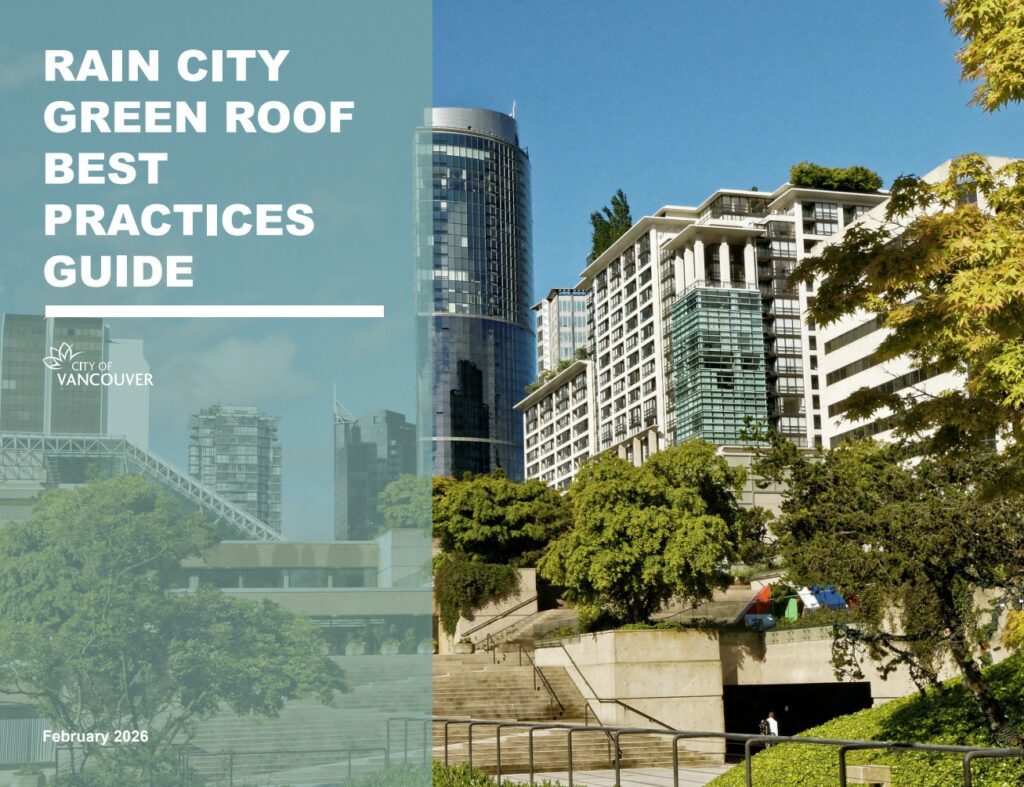
The City’s Rain City Green Roof Best Practices Guide is the result of three years of collaboration between various internal departments and external consulting firms and subject matter experts.
Next Level’s Vancouver-based Dr. Karen Liu, Green Roof Specialist was humbled to take part and contribute her knowledge and experience to this important document.
Encourages Multi-Functional Green Roofs
The guide encourages green roof designs that optimize multi-functional benefits and performance to help advance the City’s climate adaptation, livability and environmental issues.
While not a construction standard, the guide offers practical guidance that enhance the quality and resilience of green roofs through design, installation and maintenance.
Recommended Plant List & More
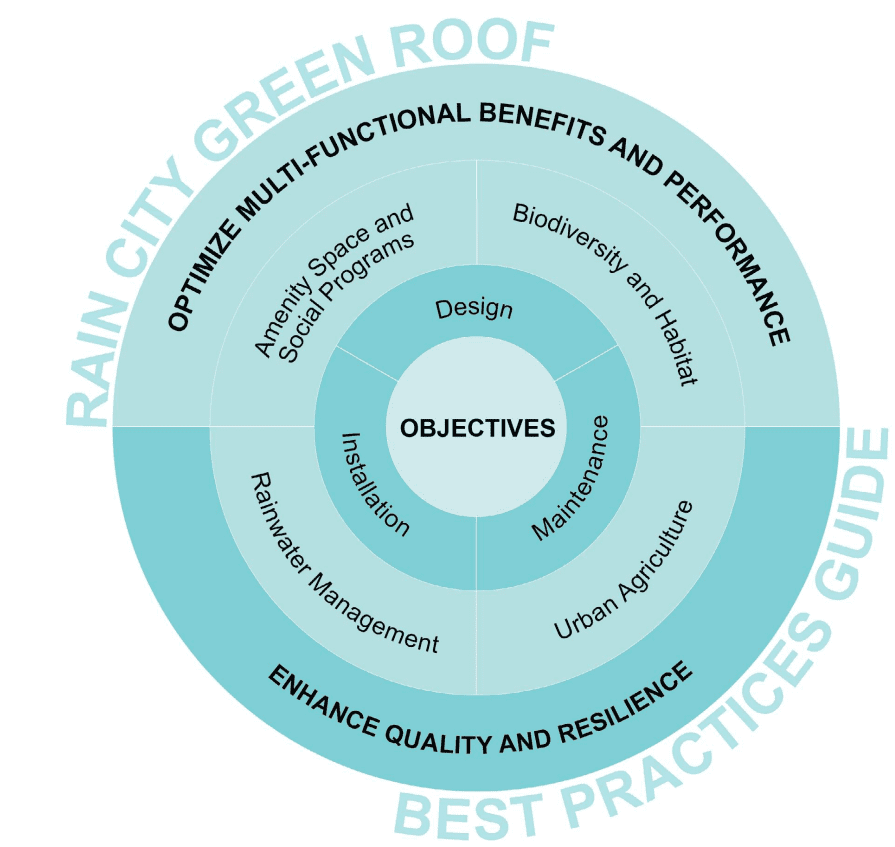
Some highlights from the Rain City Green Roof Best Practices Guide:
- Explains how green roofs advance the City’s strategies and policies, including its updated Rainwater Management requirements that came into effect on January 1st, 2026.
- Shares best practices for the design, installation and maintenance of resilient and multi-functional green roofs, highlighting the life-cycle approach.
- Offers design scenarios that emphasize multi-functionality and multiple co-benefits such as rainwater management, biodiversity, amenity space and urban agriculture.
- Shares case studies of green roofs in Vancouver, including the renowned Robson Square and BC Law Courts roof that was originally built in 1978 and reconstructed in 2009.
- Provides a recommended green roof plant list to support pollinators, enhance urban biodiversity and foster ecosystem connectivity.
- Includes a habitat enhancement guide that offers design strategies to create biodiverse green roofs that support bees, insects and birds in the city.
Emphasis on Quality & Function
The green roof guide emphasizes the importance of both quality and function when undertaking a green roof project.
From a supplier’s perspective, Next Level Stormwater Management (NLSM) could not agree more. Our company offers high quality green roof systems to achieve a wide range functions such as rainwater management, biodiversity enhancement and amenity provision.

Tested & Guaranteed Vegetated Roofs
NLSM’s high-performing materials and systems have been accepted for the RCABC’s RoofStar Vegetated Roof Guarantee and have been tested to the stringent CSA A123.24 Standard Test Method for Wind Resistance of Vegetated Roof Assembly recently incorporated in the newly released National Building Code of Canada 2025.
Canada’s Supplier of more than 2.5 Million SQFT
Next Level Stormwater Management (NLSM) is Canada’s leading supplier of high performance rooftop retention and detention solutions such as LiteN’Less™, StormCap™, Alpine Meadow and SpongeBase™. Ready to start your green roof project? The NLSM team has more than 90 years combined industry experience and here to support you at every stage from design and construction to maintenance. Please email us or call 416-637-5772 today.
By Cristina Senjug, Partnership Manager, Next Level Stormwater Management
Next Level’s Dr. Karen Liu, Green Roof Specialist along with Cristina Senjug, Partnership Manager are honoured to partake as trainers with the annual Earth Tending Green Infrastructure Training program and look forward to the next session in May 2026.
The Earth Tending program by SpruceLab is an initiative for First Nations, Inuit, and Métis Peoples in the GTA, blending Indigenous Knowledge with Western green infrastructure practices through hands-on, land‑based learning. The program builds skills and pathways into the growing green infrastructure sector while strengthening climate resilience through nature‑based solutions.
Part of the training includes a rare tour of CF Sherway Gardens’ North Expansion Green Roof.
Take a minute and enjoy the unfolding spring splendour of CF Sherway Gardens’ North Expansion green roof in the videos taken during the tours over the last couple of years. CF Sherway Gardens’ North Expansion features 9500 square feet of a soilless green roof system supplied by Next Level Stormwater Management and installed in 2014 and 2015.
Dr. Karen Liu field’s participant questions from Vancouver, BC

Next Level Stormwater Management team looks forward to more opportunities to learn and work together in the future.
Meegwetch to all participants, Gwen Lane and SpruceLab Inc. We feel privileged to work with you!
More Than 2.5 Million Square Feet Coast-to-Coast
NLSM is Canada’s leading supplier of pre-vegetated roofs such as the LiteN’Less™ and StormCap™ systems. We customize to local requirements. Offer warranty & maintenance support, provide stormwater calculations specific to location and building/roof type, stormwater test data & related innovative hydrologic modelling. Click here to get a quote or to design your next green roof.
By Cristina Senjug, Partnership Manager, Next Level Stormwater Management
This blog is an updated and shortened version of Designing Vegetated Roofs to Survive Winter that first appeared in Construction Canada magazine May 2018 Vol. 60 No. 3
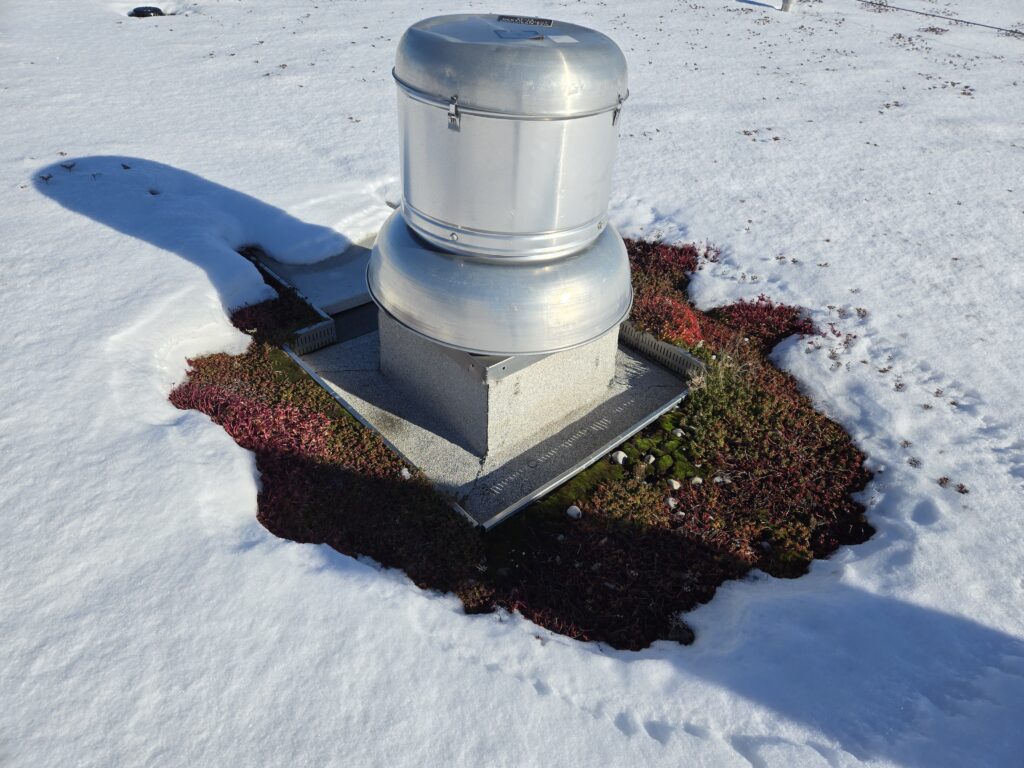
Can Green Roofs Survive Winter?
Vegetated roofs, also known as green roofs, play a key role in stormwater management, urban cooling, and air quality improvement. In Canada’s cold climate, many building owners ask whether green roofs can survive winter. The answer to whether green roofs can survive Canadian winters is yes, when they are properly designed, installed, and maintained.
Built for Cold Climates
All green roofs can be built for cold climates. Most green roofs in Canada are extensive systems. The Construction Canada article focuses on this category of green roofs which use shallow growing medium and hardy, drought‑tolerant plants such as sedums. Such plants are typically alpine plants and are well suited to extreme rooftop conditions. With the proper design and maintenance, all green roofs including intensive green roofs with deeper growing medium, survive and thrive in Canada’s climate. The following blog applies to both intensive and extensive green roofs.
Importance of Growing Medium
In colder regions or areas with rapid temperature swings, a deeper engineered growing medium helps protect plant roots. Green roof growing medium acts as thermal mass, reducing freeze‑thaw stress and retaining moisture. Growing medium are lightweight blends designed to balance drainage, water retention, and nutrients.
Optimal Seasons for Installation
Spring and autumn are the optimal seasons to install green roofs. Watering upon installation according to the supplier’s guideline is key to the green roof’s survival and long term success.
Fall is an ideal season to install. To ensure the green roof will thrive the following spring, plants must be mature and well‑established upon the Fall installation with at least 80% coverage at installation. Thorough watering before freeze‑up helps plants enter dormancy in good condition.

Fall & Winter Dormancy
Green roofs naturally go dormant during cold weather. Dormancy is a survival mechanism. It is not a sign of failure.
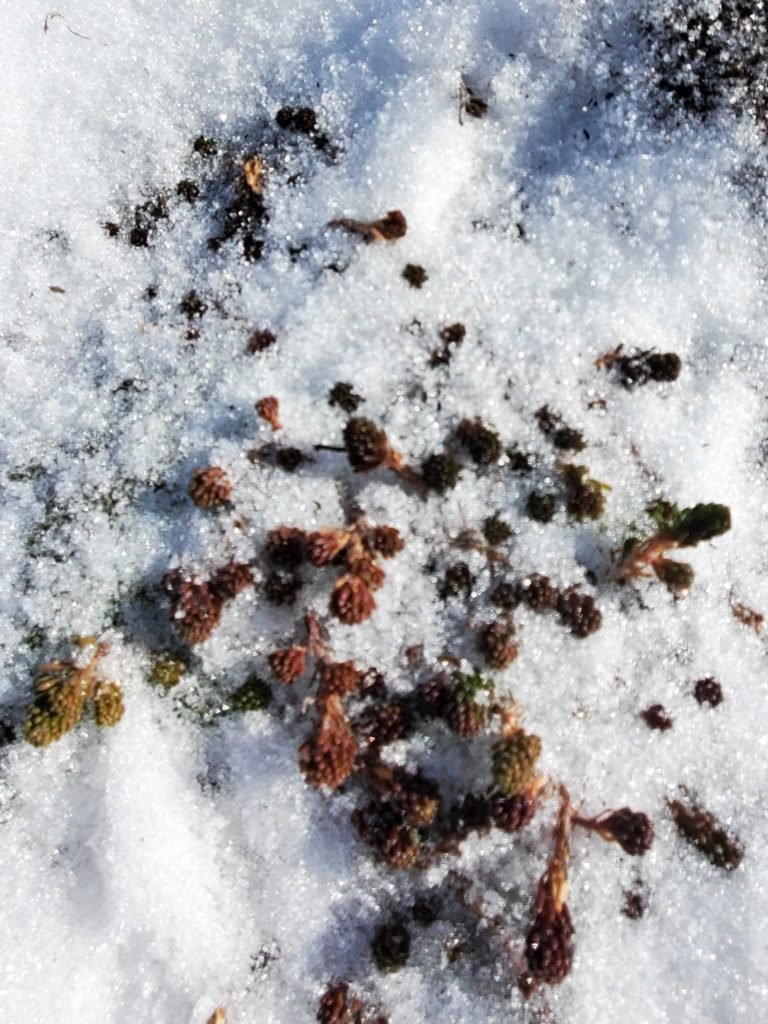
During winter, the deciduous sedums drop their large leaves and appear as 4-6” long bare stems, while the evergreen sedums retain their smaller leaves. Snow cover is beneficial as it insulates vegetation, protects against wind, and prevents moisture loss.
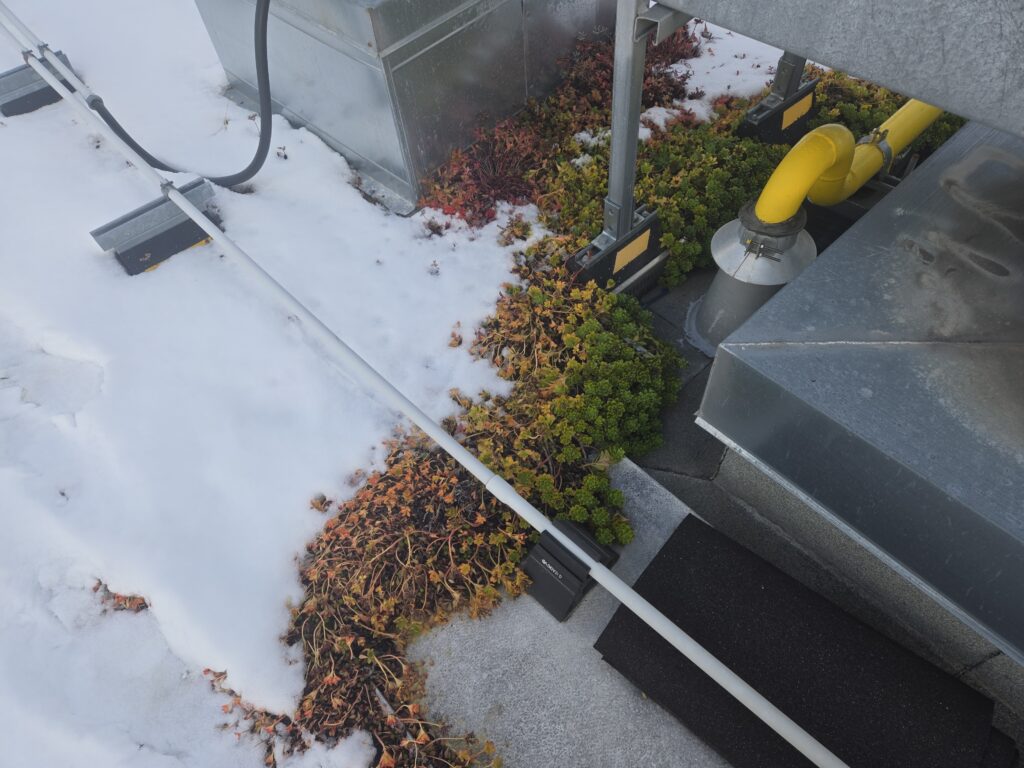
On roof areas with mechanical units, pipes, roof drains, and other penetrations that release heat, the nearby snow tends to melt, exposing the plants below. Some sedums may even stay green in those areas if they have enough warmth and moisture to avoid going into dormancy.
Winter Damage and Spring Repairs
In harsh, snow‑free conditions, vegetation may dry out or experience winter burn. Any damage is usually easy to repair in spring using sedum cuttings, or other plants, and additional growing medium if needed.
Foot traffic on frozen vegetation should be avoided, as it can permanently damage plants.
Seasonal Maintenance Matters
Fall maintenance is essential. This includes clearing drains, removing debris and weeds, winterizing irrigation systems, and ensuring plants are hydrated. Slow‑release fertilizer should only be applied in spring. Fertilizer should not after be applied after August to avoid stimulating late growth.
Designed to Last

With climate‑appropriate design, hardy plants, and seasonal maintenance, vegetated roofs perform reliably through Canadian winters. When issues arise, they are typically minor and easily corrected making green roofs a resilient and sustainable choice for urban buildings.
Read full Construction Canada article Designing Vegetated Roofs to Survive Winter, by Cristina Senjug, May 2018 Vol. 60 No. 3
The article discusses how in cold climates such as Canada, properly designed vegetated roofs, installed with hardy and mature plants that are well hydrated before winter, have a good probability of survival. If in the following spring, there is evidence of damage caused by extreme temperature fluctuations, erosion due to high winds, or plant desiccation because of foot traffic, a basic repair is possible to help these sections quickly recover.
More Than 2.5 Million Square Feet Coast-to-Coast
Next Level Stormwater Management is Canada’s leading supplier of pre-vegetated roofs such as Xeroflor, LiteN’Less™ and StormCap™ systems. We are your one-stop-shop. We customize to local requirements, provide wind and stormwater calculations specific to location and building/roof type, P.Eng letters, and other documentation. We offer various products & services including warranty & maintenance support. Click here or call us at 416-637-5772 to start your design.
High Performance. Low Emissions. Future-Proofed
By Dr. Karen Liu, Green Roof Specialist, Next Level Stormwater Management®
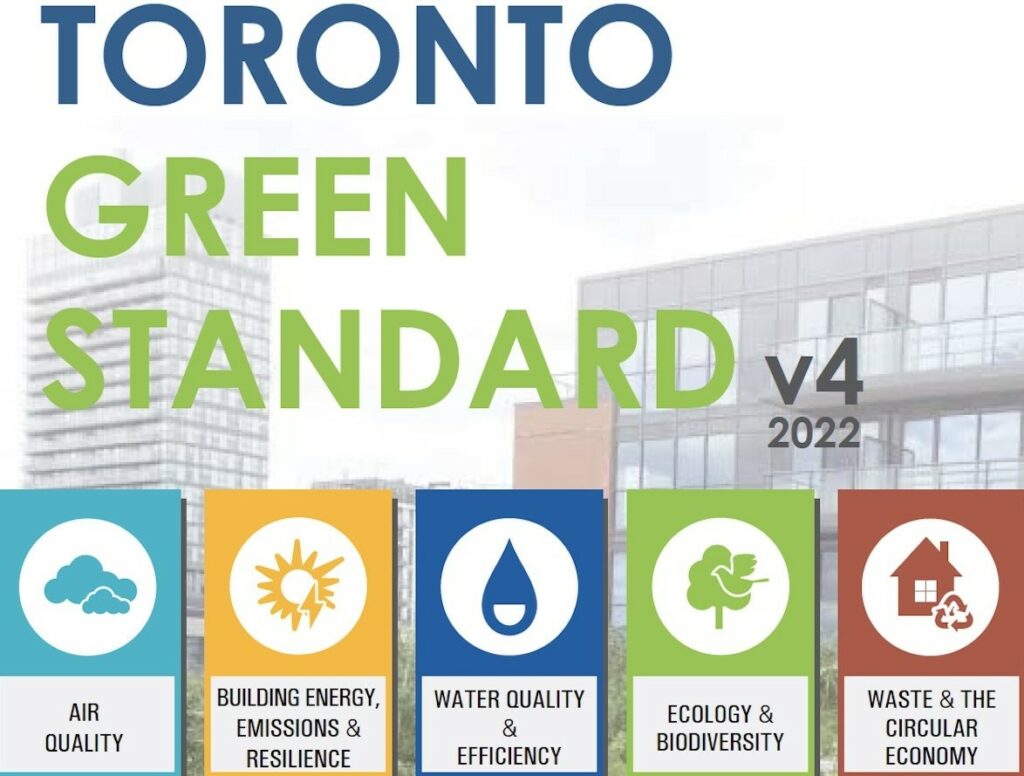
The Toronto Green Standard version 4 (TGS v4) raises the bar for all new development in the city. Green roofs play an important role especially on tight, urban sites. TGS v4 applies to all new planning applications in the City of Toronto received on or after May 1, 2022. Below is a review of the requirements and how green roofs help meet them.
Five performance categories:
- Air Quality
- Building Energy, Emissions & Resilience
- Water Quality & Efficiency
- Ecology & Biodiversity
- Waste and the Circular Economy
Importance of Green Roofs
Green roofs, with their multiple benefits, play an important role in TGS v4 via 2 categories Water Quality & Efficiency (WQ) by Managing Stormwater and Ecology & Biodiversity (EC) through Landscape & Biodiversity.
WQ 1.1 Water Balance, Quality & Quantity Control
Tier 1 Water Balance requires the site to retain a minimum of 50% of the total average annual rainfall volume (or equivalent 5mm from each rainfall event) generated from all site surfaces through infiltration, evapotranspiration, water harvesting and/or reuse, in accordance with the Wet Weather Flow Management Guidelines (WWFMG).
Green roofs can retain rainfall through initial abstraction (IA). According to the WWFMG, the IA are 5mm and 7mm for extensive and intensive systems, respectively. Furthermore, stored water in the cistern can evapotranspirate on the green roof through irrigation water reuse. These mechanisms are key to achieve water balance on site. NLSM offers optional irrigation reports to support water balance calculations.
TGS v4 defines an Intensive green roof as having a minimum growing medium depth of 150 mm with a diverse mix of plants appropriate to the growing medium depth and roof height. On the other hand, extensive green roofs contain hardy, low-profile plants growing in less than 150 mm of growing medium.
WQ 1.3 On-site Green Infrastructure
Tier 1 requires the total landscaped site area, located at and above grade. It includes at least 1 of the following six green infrastructure features:
- A Green Roof covering at least 80% of Available Roof Space
- An Intensive Green Roof for 80% of the Green Roof Area provided
- A Biodiverse green roof to support pollinator species covering a minimum of 50% Green Roof Area
- 25% of the Lot Area at or above-grade, planted with native flower/pollinator species
- At-grade Bioretention facilities provided to capture and control 75% of runoff from on-site hardscape surfaces, or
- Reforestation of a portion of the site (beyond the limit of a stewardship plan)
Note that three of the six options above involve green roofs. Putting green infrastructure on the roof is particularly attractive for development in tight urban sites with perhaps zero lot lines where there is little or no space to accommodate green infrastructures at grade.
The TGS v4 defines a Biodiverse green roof as an Intensive green roof that supports pollinator species. It is located at or below the 8th storey of the building to maximize pollinator access and must follow the recommended plant species found in Appendix A of the Design Guidelines for Biodiverse Green Roofs, with at least two species in bloom at all periods over the growing season. The design must also address two or more applicable Design Strategies from section 4.2 of the guide as listed below:
- Increase depth of growing medium
- Vary composition (structure) of growing media
- Provide topographic variety
- Provide microclimates
- Diversity plant species
- Provide perching habitat
- Provide nesting opportunities
- Provide water source (s)
A permanent irrigation system is required on both intensive and biodiverse green roofs to provide supplemental watering as necessary. Direct access to the roof should be provided for maintenance through a door or hatch located away from the edges to enable safe maintenance. A maintenance contract is recommended for at least the first 5 years of the green roof to ensure it receives a good start.
EC 2.3 Green and Cool Roofs
Landscape & Biodiversity Tier 1 requires buildings to provide one or a combination of the following:
- Green Roof
- Solar PV, or
- Cool roof
NSLM Green Roof Systems Comply with TGS v4
All NLSM green roof systems meet the TGS v4. NLSM offers optional professional engineer-stamped wind letter for submission to the City. This chart summarizes the compliance path and helps you select the system that best meets your project’s needs:
| Categories* | NLSM Systems | WQ 1.3 Compliance Options | WQ 1.1 Initial Abstraction** |
| Extensive | LiteN’Less® II | 80% of available roof space | 5 mm |
| LiteN’Less® III | 80% of available roof space | 5 mm | |
| StormCap® | 80% of available roof space | 5 mm | |
| StormCap® Detain 3° | 80% of available roof space | 5 mm | |
| TerraExt Sedum Standard | 80% of available roof space | 5 mm | |
| TerraExt with BioBerm® | 80% of available roof space | 5 mm | |
| Intensive | Flora Garden | 80% of green roof area provided | 7 mm |
| Biodiverse | Alpine Meadow | 50% of green roof area provided | 7 mm |
| Alpine Meadow+ | 50% of green roof area provided | 7 mm |
** Based on Toronto Water’s Wet Weather Flow Management Guidelines (WWFMG)
Supplier of more than 3 M SQFT Coast-to-Coast
NLSM is Canada’s leading supplier of pre-vegetated roofs such as LiteN’Less®, Xeroflor® and StormCap® systems. We customize to local requirements. Email or call (416) 637-5772.
Corporate Brochure | Vegetated Roofing Solutions | Stormwater Management Technologies
Next Level Stormwater Management products range from soilless extensive green roofs to intensive vegetated roofing systems, including specialized stormwater retention and detention, vegetated and non-vegetated systems.
See four (4) page corporate brochure for details.

Supplier of more than 2.5 M SQFT Coast to Coast
NLSM is Canada’s leading supplier of pre-vegetated roofs such as LiteN’Less™, Xeroflor® and StormCap™ systems. We customize to local stormwater and biodiversity requirements. Email or call (416) 637-5772 Ext 1.
NLSM Team Celebrates Award-Winning BTC Green Roofs
Next Level’s Sasha Aguilera, Design Ambassador and Sawsan Hlal, Estimating and Operations joined Dr. Karen Liu, Green Roof Specialist on the Broadway Tech Centre (BTC) in Vancouver, British Columbia on World Green Roof Day 2024.
Designed by Randy Sharp and Connect Landscape Architecture, this award-winning, LEED Platinum certified campus was built on a former brownfield. Four of the eight low-rise BTC buildings are covered with a total of 10,000 square metres of lightweight soilless vegetated roof systems. They have a combined water storage capacity of 460,000 litres, or more than 1,500 bathtubs of rainfall (based on 300 litres per bathtub). Every year, the four green roofs absorb 10 million litres of rainfall, equivalent to four Olympic sized swimming pools, feeding the plants and evaporating back to the atmosphere, thus diverting it from our stormwater infrastructure. This thin-layered system has a superior water retention-to-weight ratio. It is comprised of locally grown roll-out sedum mats with 8-10 species of drought tolerant sedum. System base layers include mineral wool and fleece as retention layers along with a drainage layer and root barrier.
BTC is winner of the Award of Excellence, Green Roof For Healthy Cities and the Design Excellence Award, CSLA
Download PDF of Case Study
Supplier of more than 2.5 M SQFT Coast to Coast
NLSM is Canada’s leading supplier of pre-vegetated roofs such as LiteN’Less™, Xeroflor® and StormCap™ systems. We customize to local stormwater and biodiversity requirements. Email or call (416) 637-5772 Ext 1.
World Green Roof Day 2022
Images by Greg Van Riel, Sergej Krivenko and Terry Guscott
More Than 2.5 Million Square Feet Coast-to-Coast
NLSM is Canada’s leading supplier of pre-vegetated roofs such as the LiteN’Less™ and StormCap™ systems. We customize to local requirements. Offer warranty & maintenance support, provide stormwater calculations specific to location and building/roof type, stormwater test data & related innovative hydrologic modelling. Click here to get a quote or to design your next green roof.
Read Wind Design Process for Modular Vegetated Roofing Systems by Dr. Karen Liu and Sasha Aguilera in Construction Canada January 2021 Vol. 63 No. 1.

This article was written by Next Level Stormwater Management’s Green Roof Specialist Dr. Karen Liu and Design Ambassador Sasha Aguilera – key participants in the research consortium that developed the first national wind testing standard for vegetated roofing. It explains the Canadian Standards Association (CSA) A123.24-15 Standard Test Method for Wind Resistance of Modular Vegetated Roof Assembly and explains the three simple steps that help determine a vegetated roof’s ability to withstand and protect against wind forces.
NLSM Provides P. Eng Stamped Wind Resistance Letters. Get Started! Contact us
Watch Video of NRC and UL Testing
More Than 2.5 Million Square Feet Coast-to-Coast
NLSM is Canada’s leading supplier of pre-vegetated roofs such as Xeroflor, LiteN’Less™ and StormCap™ systems. We are your one-stop-shop. We customize to local requirements, provide wind and stormwater calculations specific to location and building/roof type, P.Eng letters, and other documentation. We offer various products & services including warranty & maintenance support. Click here to start your design.