
The Business Case for Green Roof Amenity Space
The following blog post summarizes key insights from “Sky‑High Returns: The Economic and Social Case for Green Roof Amenity Space,” featured in the Spring 2026 issue of Living Architecture Monitor.
By Dr. Karen Liu, Green Roof Specialist, Next Level Stormwater Management®
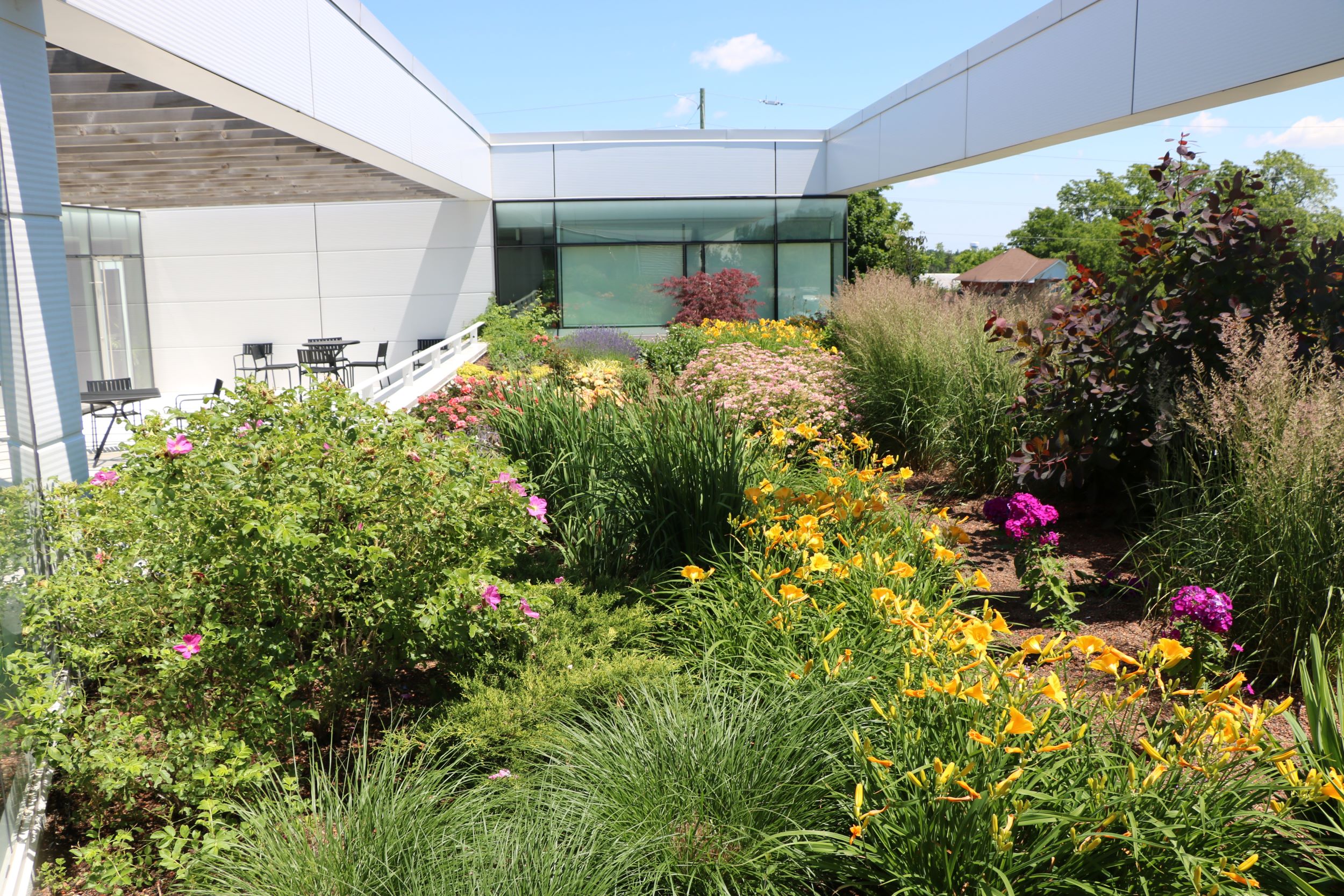
As North American cities densify to address climate change, population growth, and housing affordability, green space at ground level is becoming increasingly scarce. In this context, green roof amenity spaces are no longer optional. Instead, they are essential urban infrastructure that supports human well‑being while delivering measurable economic value.

Research increasingly demonstrates that the benefits of green roofs extend well beyond environmental performance. In the United States, apartment buildings with green roofs in New York City’s Battery Park City neighbourhood achieved average rents 16% higher than comparable buildings without green roofs. In Oak Park, Illinois, second‑floor condominium units with private green roof terraces sold for 12.4% more per unit, while green roof construction costs were significantly lower than the added value.
Canadian research shows similar results. A CMHC study estimated that recreational rooftop gardens can increase property values by approximately 11%. More recently, a University of Northern British Columbia study analyzing over 2,000 property listings found that green roofs increased average property values by approximately $700,000 in Vancouver, and added approximately $325 per square metre ($30 per square foot) in Toronto. Given that typical extensive green roof costs in Toronto range from $25–35 per square foot, many projects can recover all or most of their investment through increased listing prices alone, before accounting for energy savings, stormwater compliance, and extended roof membrane lifespan.
Multi-functional Rooftop Hardscapes
Municipal requirements for outdoor amenity space and stormwater management often compete for limited rooftop area on new developments. This challenge can be exacerbated by restrictions on “double dipping.” For example, the City of Toronto limits green roofs to no more than 25% of required outdoor amenity space for apartment buildings. Fortunately, emerging design strategies allow amenity spaces to also manage stormwater effectively.
Our SpongeBase™ system adds retention and detention capacity and effectively transforms otherwise impervious amenity surfaces into pervious ones to help meet the site’s stormwater management targets. SpongeBase Retention inserts water-absorbent materials in the void space under patio pavers or decking to retain water and help meet municipal water balance target. SpongeBase Detention involves detention elements that convert the space below the rooftop patio into temporary detention reservoirs to meet quantity control requirement. These tools can be seamlessly integrated with green roofs or blue‑green roof systems to create dual‑function green roof amenity spaces that serve people and infrastructure needs simultaneously.

Growing Demand for Green Roof Amenity Space
Beyond financial and regulatory benefits, green roof amenity spaces deliver significant social and health value. They provide restorative outdoor environments for residents, workers, students, patients, and visitors, supporting mental health, reducing stress, and fostering social connection. Research consistently shows that even visible green roofs, including those on schools and hospitals, contribute to improved well‑being and learning outcomes.
While returns vary by building and location, the evidence is clear: green roof amenity spaces increase property value, support urban resilience, and improve quality of life. With more than 80% of people in Canada and the United States living in cities, designing multifunctional rooftop green spaces is becoming essential to meeting the needs of urban communities.
Technical Expertise and Project Support
Next Level Stormwater Management works with design teams to supply and integrate green roofs and amenity spaces that can increase ROI, extend roof membrane service life and improving the building’s return on investment.
Beyond supplying systems and products, Dr. Karen Liu and the rest of the Next Level Stormwater Management® team provide technical guidance, system selection and design coordination services to help project teams confidently deliver green roof amenity spaces that satisfy performance targets and user expectations. This collaborative approach supports better outcomes and long‑term performance.
About the Author
Dr. Karen Liu is a leading expert in green roof research with more than 25 years of experience spanning research, standards development, and hands-on project delivery. She has led pioneering green roof research programs in Canada, helped develop national wind testing standards for vegetated roofing, and contributed to dozens of influential technical and academic publications. Karen has worked on hundreds of green roof projects across North America, Europe, and Asia, and is actively involved in advancing industry training and professional standards. She currently serves on multiple boards and committees supporting green infrastructure and landscape architecture.
Canada’s Supplier of more than 3 Million SQFT
Next Level Stormwater Management® (NLSM) is Canada’s leading supplier of high performance rooftop retention and detention solutions such as LiteN’Less®, StormCap®, Alpine Meadow and SpongeBase™. Ready to start your green roof project? The NLSM team has more than 90 years combined industry experience and here to support you at every stage from design and construction to maintenance. Please email us or call 416-637-5772 today.