
By Cristina Senjug, Partnership Manager, Next Level Stormwater Management
This blog is an updated and shortened version of Designing Vegetated Roofs to Survive Winter that first appeared in Construction Canada magazine May 2018 Vol. 60 No. 3
Can Green Roofs Survive Winter?
Vegetated roofs, also known as green roofs, play a key role in stormwater management, urban cooling, and air quality improvement. In Canada’s cold climate, many building owners ask whether green roofs can survive winter. The answer to whether green roofs can survive Canadian winters is yes, when they are properly designed, installed, and maintained.
Built for Cold Climates
All green roofs can be built for cold climates. Most green roofs in Canada are extensive systems. The Construction Canada article focuses on this category of green roofs which use shallow growing medium and hardy, drought‑tolerant plants such as sedums. Such plants are typically alpine plants and are well suited to extreme rooftop conditions. With the proper design and maintenance, all green roofs including intensive green roofs with deeper growing medium, survive and thrive in Canada’s climate. The following blog applies to both intensive and extensive green roofs.
Importance of Growing Medium
In colder regions or areas with rapid temperature swings, a deeper engineered growing medium helps protect plant roots. Green roof growing medium acts as thermal mass, reducing freeze‑thaw stress and retaining moisture. Growing medium are lightweight blends designed to balance drainage, water retention, and nutrients.
Optimal Seasons for Installation
Spring and autumn are the optimal seasons to install green roofs. Watering upon installation according to the supplier’s guideline is key to the green roof’s survival and long term success.
Fall is an ideal season to install. To ensure the green roof will thrive the following spring, plants must be mature and well‑established upon the Fall installation with at least 80% coverage at installation. Thorough watering before freeze‑up helps plants enter dormancy in good condition.

Fall & Winter Dormancy
Green roofs naturally go dormant during cold weather. Dormancy is a survival mechanism. It is not a sign of failure.
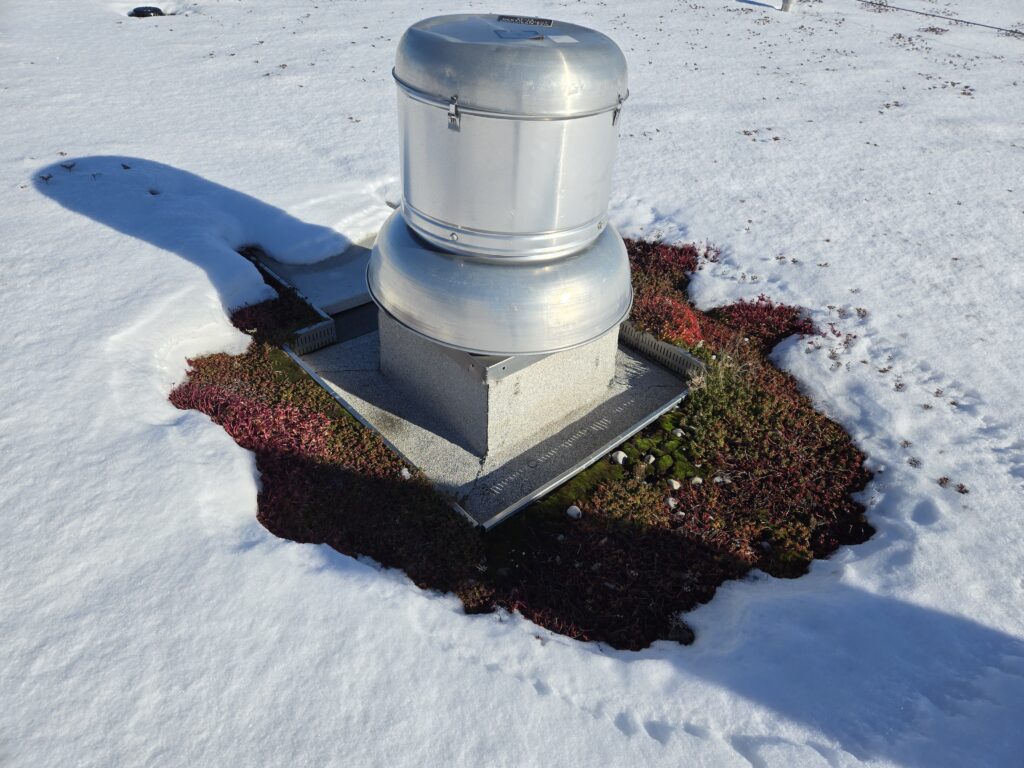
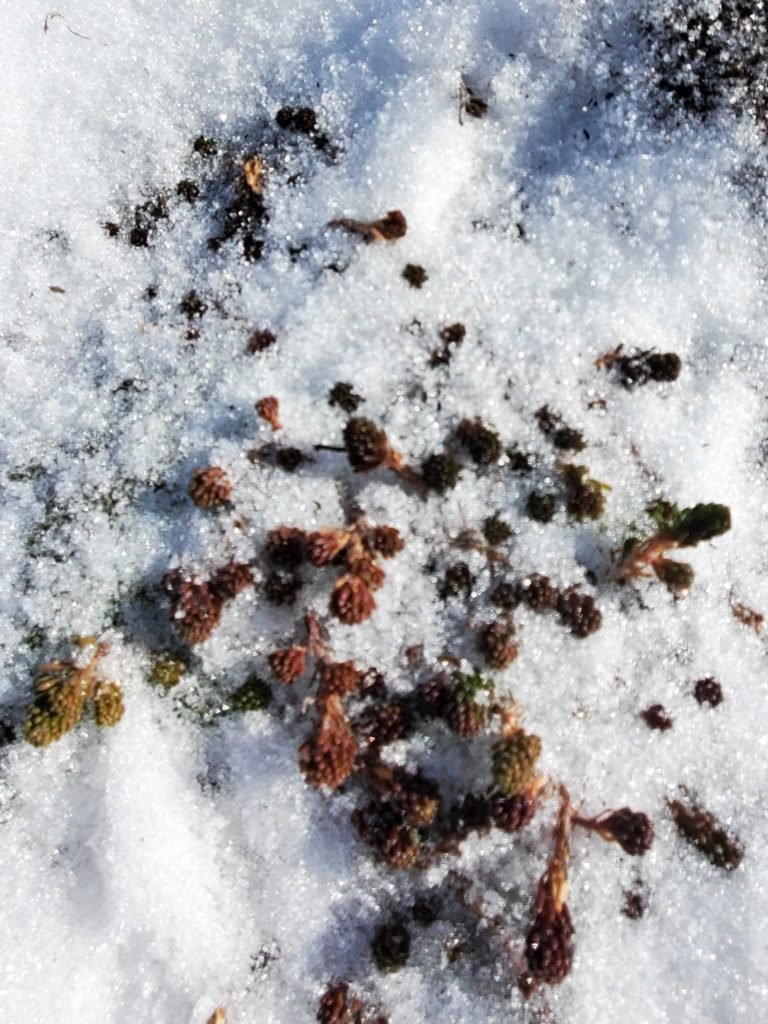
During winter, the deciduous sedums drop their large leaves and appear as 4-6” long bare stems, while the evergreen sedums retain their smaller leaves. Snow cover is beneficial as it insulates vegetation, protects against wind, and prevents moisture loss.
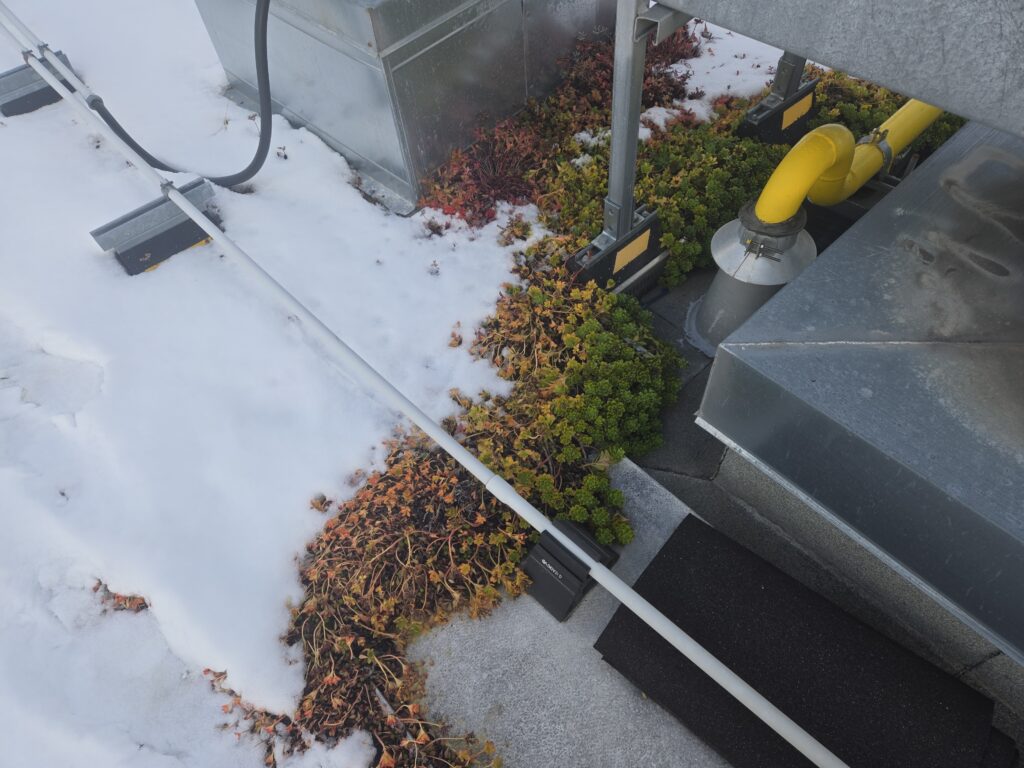
On roof areas with mechanical units, pipes, roof drains, and other penetrations that release heat, the nearby snow tends to melt, exposing the plants below. Some sedums may even stay green in those areas if they have enough warmth and moisture to avoid going into dormancy.
Winter Damage and Spring Repairs
In harsh, snow‑free conditions, vegetation may dry out or experience winter burn. Any damage is usually easy to repair in spring using sedum cuttings, or other plants, and additional growing medium if needed.
Foot traffic on frozen vegetation should be avoided, as it can permanently damage plants.
Seasonal Maintenance Matters
Fall maintenance is essential. This includes clearing drains, removing debris and weeds, winterizing irrigation systems, and ensuring plants are hydrated. Slow‑release fertilizer should only be applied in spring. Fertilizer should not after be applied after August to avoid stimulating late growth.
Designed to Last

With climate‑appropriate design, hardy plants, and seasonal maintenance, vegetated roofs perform reliably through Canadian winters. When issues arise, they are typically minor and easily corrected making green roofs a resilient and sustainable choice for urban buildings.
Read full Construction Canada article Designing Vegetated Roofs to Survive Winter, by Cristina Senjug, May 2018 Vol. 60 No. 3
The article discusses how in cold climates such as Canada, properly designed vegetated roofs, installed with hardy and mature plants that are well hydrated before winter, have a good probability of survival. If in the following spring, there is evidence of damage caused by extreme temperature fluctuations, erosion due to high winds, or plant desiccation because of foot traffic, a basic repair is possible to help these sections quickly recover.
More Than 2.5 Million Square Feet Coast-to-Coast
Next Level Stormwater Management is Canada’s leading supplier of pre-vegetated roofs such as Xeroflor, LiteN’Less™ and StormCap™ systems. We are your one-stop-shop. We customize to local requirements, provide wind and stormwater calculations specific to location and building/roof type, P.Eng letters, and other documentation. We offer various products & services including warranty & maintenance support. Click here or call us at 416-637-5772 to start your design.